Photographs have a remarkable ability to capture our attention. A single picture can preserve a childhood memory, document a particular period in someone’s life, or offer a glimpse of a person whose story remains largely unknown. When several portraits are placed together, they invite us to compare appearances and imagine the experiences that may connect them.
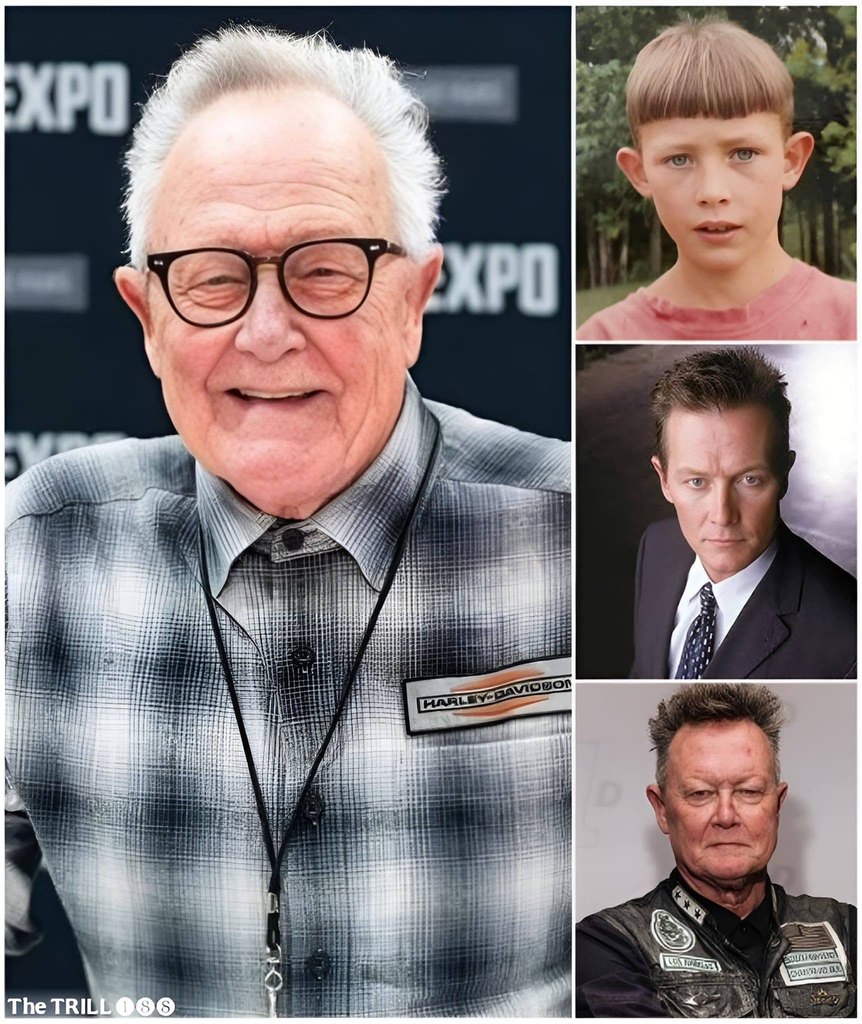
A striking four-part collage does exactly that. It features a young boy, a man dressed in a formal suit, an older man wearing a dark vest with patches, and a prominent portrait of a white-haired man wearing glasses and a Harley-Davidson badge.
The photographs create an apparent journey through different stages of life. Yet an important question remains: do all the images actually depict the same individual? Without verified identification or reliable information about their origins, the answer cannot be established from the collage alone.
Even so, the image offers an interesting starting point for exploring photography, aging, personal identity, and the importance of preserving the stories behind pictures.
Four Photographs, Four Distinct Impressions
The first thing that makes the collage interesting is the contrast between its photographs.
A Childhood Portrait
The photograph in the upper-right corner shows a young boy with a bowl haircut, wearing a reddish-pink shirt. Trees and greenery form the background, giving the picture an outdoor setting.
Childhood portraits often become particularly meaningful as time passes. They preserve details that can otherwise be forgotten, including hairstyles, clothing, facial expressions, and the environments in which children were photographed.
However, a childhood photograph reveals only a small portion of a person’s life. It cannot independently establish what that individual became as an adult or which experiences shaped their future.
A Formal Adult Portrait
The middle-right photograph features a man with short, styled hair, wearing a dark suit, white shirt, and patterned tie.
The formal clothing and studio-style background create a different impression from the childhood portrait. The photograph appears designed to present the subject in a polished, professional manner.
Portraits like this are commonly associated with professional profiles, publicity materials, business settings, or personal collections. Without information about the photographer, date, or original publication, however, its precise purpose remains unknown.
An Older Man Wearing a Patched Vest
The lower-right photograph shows an older man wearing dark clothing and a vest displaying several patches.
Patches can communicate information about organizations, occupations, affiliations, achievements, or personal interests. Their meaning depends on the symbols, wording, and context in which they appear.
In this photograph, the patches are not sufficiently clear to establish every affiliation with confidence. It would therefore be premature to assign the subject a particular occupation, organizational membership, or personal history based solely on his clothing.
The Prominent Portrait
The largest photograph shows an older man with white hair, black glasses, and a gray plaid shirt. A Harley-Davidson badge is visible on the shirt.
The motorcycle-related branding is an immediately noticeable detail. Harley-Davidson is a well-known American motorcycle manufacturer whose brand has become closely associated with motorcycle culture.
Nevertheless, wearing a branded shirt does not establish that someone owns a particular motorcycle, works for the company, belongs to a motorcycle club, or has a specific professional background.
The portrait is visually prominent, but its subject’s identity and the circumstances in which it was taken remain unverified.
How Photographs Capture the Passage of Time
One reason people find photographic collages so compelling is that they encourage direct visual comparison.
When portraits from different periods are placed together, viewers naturally look for similarities and differences. Hairstyles, facial features, clothing, posture, and photographic styles become clues that invite closer examination.
Some characteristics may remain recognizable across many years, while others change considerably. Hair can become lighter or thinner, facial features can appear different with age, and personal style can evolve.
Photography also changes with technology. Older images may have different color tones, grain, contrast, or framing from modern digital portraits.
These differences matter because a collage may combine photographs taken with different cameras, under different lighting conditions, and for entirely different purposes.
A childhood snapshot, a professional headshot, and a publicity photograph are not necessarily comparable records. Their differences may reflect the circumstances of photography as much as changes in the people pictured.
Why the Story Behind a Photograph Matters
A photograph can show us what was captured by a camera, but it rarely explains the entire story.
To understand an image more fully, it helps to know who took it, when it was taken, where it was originally published, and whether the people shown have been correctly identified.
For example, a portrait of someone wearing motorcycle-related clothing might suggest an interest in motorcycles. Additional evidence could establish whether the person was a rider, mechanic, collector, manufacturer, or simply someone wearing a particular shirt.
Without that evidence, the interpretation remains uncertain.
The same principle applies when multiple portraits are arranged into a timeline. Their placement may suggest that they show one person at different ages, but the layout itself does not prove that connection.
This distinction is especially important when photographs circulate on social media, where captions and visual arrangements can quickly become detached from their original sources.
How to Verify the Identity Behind a Photo Collage
If you want to discover the actual story behind a collage like this one, several practical steps can help.
1. Find the Original Source
Look for the earliest available version of the image. An original publication may include a caption, photographer credit, date, or name that is missing from later reposts.
A reliable source is generally more useful than a social media post that provides no supporting information.
2. Compare the Photographs With Documented Images
If a possible identity emerges, compare the photographs with independently documented portraits from reliable publications or official archives.
Visual resemblance can be a starting point, but it should not be treated as definitive proof.
3. Examine Captions and Dates
Original captions can provide important context. Dates may help establish whether the proposed timeline is plausible.
However, captions copied across multiple websites do not necessarily represent independent confirmation. Whenever possible, trace the information back to its original source.
4. Look for Supporting Biographical Records
Official biographies, reputable interviews, historical archives, and established news organizations can help confirm personal details.
The strongest conclusions come from evidence that independently supports the identification rather than from assumptions based on appearance alone.
5. Separate Facts From Interpretation
It is reasonable to describe visible details, such as a hairstyle, suit, or branded shirt. It is different to claim that those details prove a person’s occupation, achievements, or life experiences.
Keeping these categories separate makes an article more trustworthy and helps readers understand what is known and what remains uncertain.
The Cultural Appeal of Motorcycle Imagery
The Harley-Davidson badge in the main portrait adds another dimension to the collage.
For many enthusiasts, motorcycles represent engineering, craftsmanship, travel, recreation, and personal expression. Motorcycle-related clothing can also communicate an interest in a particular brand or culture.
Harley-Davidson has a long history in American motorcycle manufacturing, and its recognizable branding appears on motorcycles, apparel, accessories, and other merchandise.
But the meaning of motorcycle imagery varies from person to person. One individual may associate motorcycles with weekend rides, another with mechanical work, and another with a longstanding family interest.
A single shirt or badge cannot tell us which meaning applies to the person in a photograph. That part of the story requires additional information.
Preserving Personal History Through Photography
Photographs become more valuable when their context is preserved.
A well-organized family or personal archive can include names, approximate dates, locations, photographer information, and brief explanations of significant events. These details help future viewers understand why a photograph was taken and whom it represents.
Digital copies can also make old photographs easier to preserve and share. Keeping an unedited original alongside any restored or color-corrected version helps maintain a record of the source image.
When sharing photographs publicly, it is also important to consider privacy, permission, copyright, and whether the accompanying caption accurately represents the people pictured.
A compelling image deserves an equally responsible explanation.
Frequently Asked Questions
1. Do all four photographs show the same person?
The collage appears arranged to suggest a progression through life, but the identity of the people in the photographs has not been independently verified. The arrangement alone cannot establish that all four images show the same individual.
2. What does the Harley-Davidson badge tell us?
It indicates that the shirt features Harley-Davidson branding. It does not independently establish the wearer’s occupation, motorcycle ownership, or membership in any organization.
3. Why do people enjoy photographs showing different ages?
These photographs encourage comparisons across time and can evoke curiosity, nostalgia, and reflection. They also provide opportunities to discuss changes in fashion, photography, and personal appearance.
4. How can I find out who appears in an old photograph?
Start with the original source, examine available captions and dates, and look for confirmation in reputable publications, official biographies, or historical archives. Avoid relying on resemblance alone.
5. Can a photo collage be used as evidence of someone’s life story?
A collage can illustrate a story, but its claims need supporting evidence. Reliable identification, dates, and contextual information are important when presenting a photographic timeline as a factual biography.
Conclusion
The four-part collage captures attention by placing very different portraits side by side. A childhood photograph, a formal adult portrait, and images of older men invite viewers to consider how appearance, clothing, and personal presentation can change over time.
Yet the most important lesson is that photographs and the stories attached to them are not the same thing. An image can provide valuable visual evidence, but its meaning depends on context, accurate identification, and reliable supporting information.
Whether you are exploring family photographs, researching a public figure, or simply enjoying an intriguing collage, taking time to verify the details can make the experience more rewarding.
Sometimes, the most interesting part of a photograph is not just what we see, but what we can discover when we investigate its story responsibly.