Time has a remarkable way of changing the way we look. A photograph taken decades ago can bring back memories of youth, different fashions, familiar smiles, and moments that seem to belong to another lifetime.
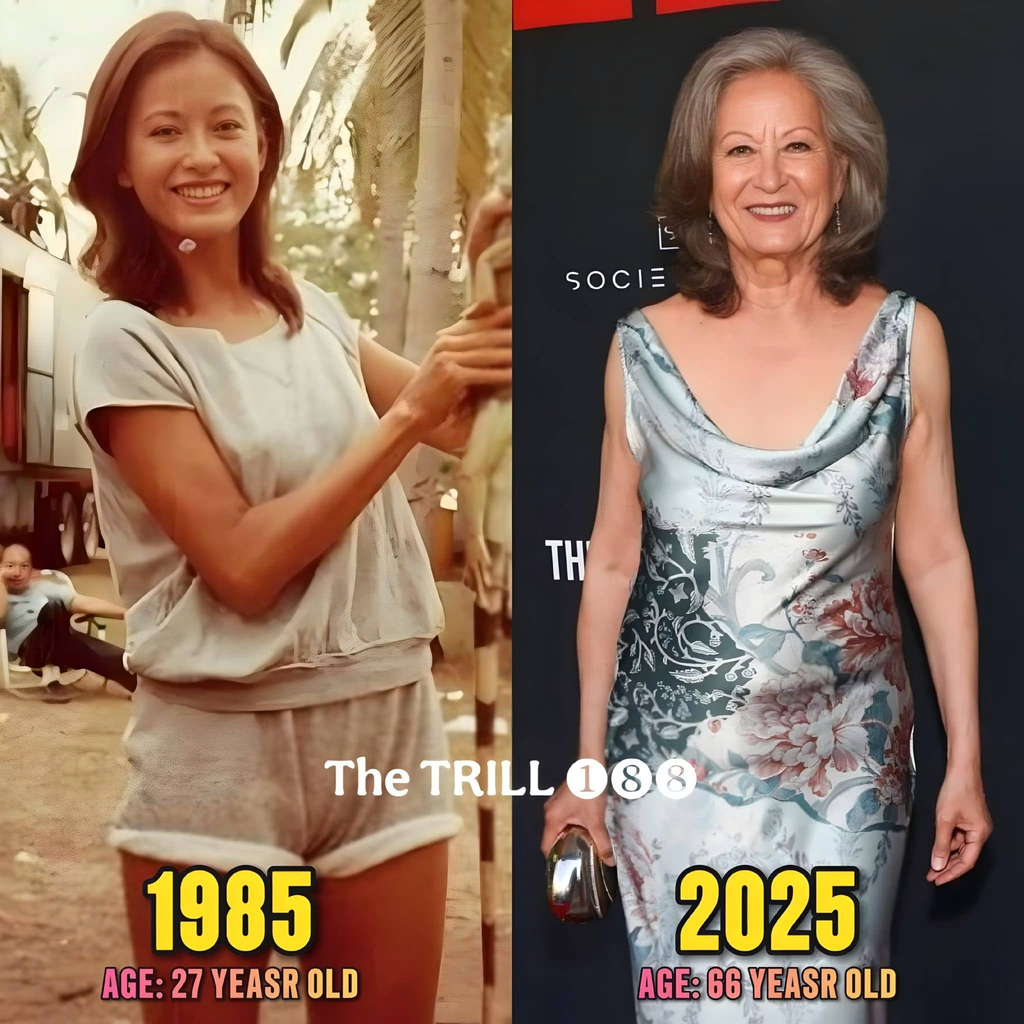
A fascinating side-by-side comparison reportedly showing the years 1985 and 2025 offers a glimpse into this journey. On one side is a smiling young woman wearing a simple white outfit. On the other is an older woman with beautiful gray hair, an elegant floral dress, and a warm smile.
The photographs are separated by approximately 40 years, illustrating how dramatically our appearance can evolve while certain familiar characteristics remain recognizable.
Although the woman’s identity and the exact dates of the photographs have not been independently verified, the comparison raises an interesting question: What really happens to our appearance as we move through four decades of life?
A Look Back at 1985
The photograph on the left presents a young woman with shoulder-length reddish-brown hair, a bright smile, and a relaxed appearance.
Her simple clothing and the outdoor setting give the picture a nostalgic quality. It feels like a glimpse into an earlier generation, when everyday photographs often captured ordinary moments without the polished presentation commonly seen in modern photographs.
The year 1985 belonged to a very different visual era.
Fashion trends, hairstyles, photography equipment, and everyday lifestyles were different from those of today. Photographs were frequently captured on film, and their colors, lighting, and textures often reflected the technology available at the time.
The woman’s youthful appearance is the central feature of the photograph. Her smooth-looking skin, hairstyle, and casual clothing create a picture of someone at an earlier stage of adulthood.
The 2025 Photograph: A Different Chapter
The photograph on the right presents an older woman with shoulder-length gray hair, a confident smile, and an elegant floral dress.
Her appearance reflects a different stage of life. Gray hair, visible facial lines, and natural changes in skin texture are noticeable.
However, one detail stands out: her smile.
Despite the apparent passage of decades, the expression in both photographs feels warm and welcoming. This visual similarity gives the comparison an emotional quality beyond simply showing two different ages.
The elegant dress and formal-looking background also create a contrast with the casual outdoor photograph from 1985.
Together, the images offer an interesting reminder that personal style and appearance continue to evolve throughout adulthood.
What Happens to Our Appearance Over 40 Years?
Aging is a natural biological process. It affects everyone, although the timing and visible signs differ from person to person.
According to the National Institute on Aging, skin generally becomes thinner and less elastic as people grow older. It may also become drier and less smooth.
Several biological changes contribute to these differences.
1. Changes in Skin Elasticity
Collagen and elastin are important proteins that help support the skin.
As the body ages, changes in these structural components contribute to reduced elasticity and the development of wrinkles.
The skin may gradually lose some of its youthful fullness, making facial lines more noticeable.
These changes are natural and vary considerably between individuals.
2. Gray Hair and Changing Hairstyles
Hair color is another visible sign of aging.
As people grow older, hair follicles gradually produce less melanin, the pigment responsible for natural hair color.
This process can eventually result in gray or white hair.
Genetics plays an important role in determining when someone begins noticing these changes.
Hair texture, thickness, and preferred hairstyles may also change throughout adulthood.
In the comparison, the difference between the darker hair in the earlier photograph and the gray hairstyle in the later one is particularly noticeable.
3. Changes in Facial Features
Facial appearance can change considerably over several decades.
The cheeks may lose some fullness, facial contours may become less defined, and lines around the eyes and mouth may become more visible.
These changes are influenced by genetics, natural aging, environmental exposure, and lifestyle factors.
However, no two people experience aging in exactly the same way.
Why Do Some People Appear to Age Differently?
One interesting aspect of aging is that people of similar ages can have very different appearances.
There is no single explanation.
Genetics influences many characteristics, including skin structure, hair changes, and the timing of visible aging.
Environmental factors also matter.
The American Academy of Dermatology explains that prolonged ultraviolet exposure can contribute to premature skin aging, including wrinkles, age spots, and changes in skin texture.
Smoking can also accelerate visible skin aging.
Other factors, including nutrition, hydration, sleep, and general health, contribute to overall well-being and can influence how skin looks and feels.
This explains why two people who are the same age may not necessarily appear the same age.
The Importance of Sun Protection and Healthy Habits
Although natural aging cannot be stopped, certain habits can help protect skin health.
Dermatologists recommend several practical steps.
Protect your skin from sunlight: Use broad-spectrum sunscreen with SPF 30 or higher, seek shade, and wear protective clothing when outdoors.
Avoid tanning beds: Artificial ultraviolet exposure can contribute to premature skin aging and increase skin cancer risk.
Moisturize regularly: Moisturizers help maintain skin hydration and reduce the appearance of dryness.
Avoid smoking: Smoking contributes to premature wrinkles and other visible changes.
Maintain healthy habits: A balanced diet, adequate hydration, regular physical activity, and sufficient sleep support overall health.
These habits cannot reverse the natural aging process, but they can help people maintain healthier skin throughout life.
Why Comparing Old and New Photographs Feels So Special
Photographs have a unique ability to connect different stages of life.
A picture taken decades ago may capture a moment that seemed ordinary at the time. Years later, that same image can become a valuable reminder of how much has happened.
Comparing photographs from different decades can also highlight changes that are difficult to notice in everyday life.
We see differences in clothing, hairstyles, technology, and personal appearance. We also recognize familiar expressions and characteristics that seem to remain part of someone’s personality.
That is what makes a 1985-versus-2025 comparison interesting.
It is not simply about looking younger or older. It is about seeing two moments from different chapters of life placed side by side.
Growing Older Has Its Own Beauty
Modern culture often places considerable attention on youthful appearances.
Beauty advertisements, entertainment, and social media frequently emphasize smooth skin, youthful hairstyles, and age-defying products.
However, growing older is not something that needs to be hidden or treated as a failure.
Gray hair, wrinkles, and changing facial features are normal parts of human life.
An older appearance can reflect decades of experiences, relationships, challenges, achievements, and personal growth.
The later photograph in this comparison demonstrates a different kind of elegance. The woman’s gray hair, confident posture, and warm expression create an appealing image of maturity.
There is beauty in youth, but there is also beauty in the confidence and individuality that can develop with age.
Frequently Asked Questions
1. How much can a person’s appearance change in 40 years?
A person’s appearance can change significantly over four decades. Common changes include gray hair, wrinkles, reduced skin elasticity, and differences in facial fullness. The extent varies according to genetics, lifestyle, and environmental exposure.
2. Why does hair turn gray with age?
Hair turns gray when hair follicles gradually produce less melanin, the pigment responsible for its natural color. Genetics strongly influences when this process begins.
3. Can people prevent wrinkles completely?
No. Natural aging causes changes in skin structure over time. However, sun protection, avoiding smoking, and maintaining healthy skincare habits can help reduce premature skin damage.
4. Does everyone age at the same rate?
No. Genetics, environmental exposure, lifestyle, and general health all influence visible aging. Two people of the same age may have noticeably different appearances.
5. Is gray hair a normal part of aging?
Yes. Gray and white hair are natural changes that commonly occur as people grow older. The timing varies from person to person.
Conclusion: Every Stage of Life Tells a Story
The two photographs reportedly taken 40 years apart offer an interesting reminder of how time changes our appearance.
The younger woman in the earlier picture and the older woman in the later image represent two different stages of life. Their hairstyles, clothing, and visible features reflect the passage of decades.
Yet the familiar warmth of a smile provides a connection between the two moments.
Growing older is a natural part of life, and every stage has its own beauty. Instead of measuring life only by the changes visible in a photograph, perhaps we should appreciate the experiences and memories that those years represent.
Because the most meaningful part of a journey through time is not simply how different we look, but everything that happens along the way.