Chaka Khan is more than a legendary singer. With a powerful voice, fearless personal style, and a career spanning more than five decades, she has helped shape the sound of funk, soul, and contemporary R&B. Her music has reached generations of listeners, and songs such as “I’m Every Woman,” “Ain’t Nobody,” and “I Feel for You” remain important parts of popular music history.
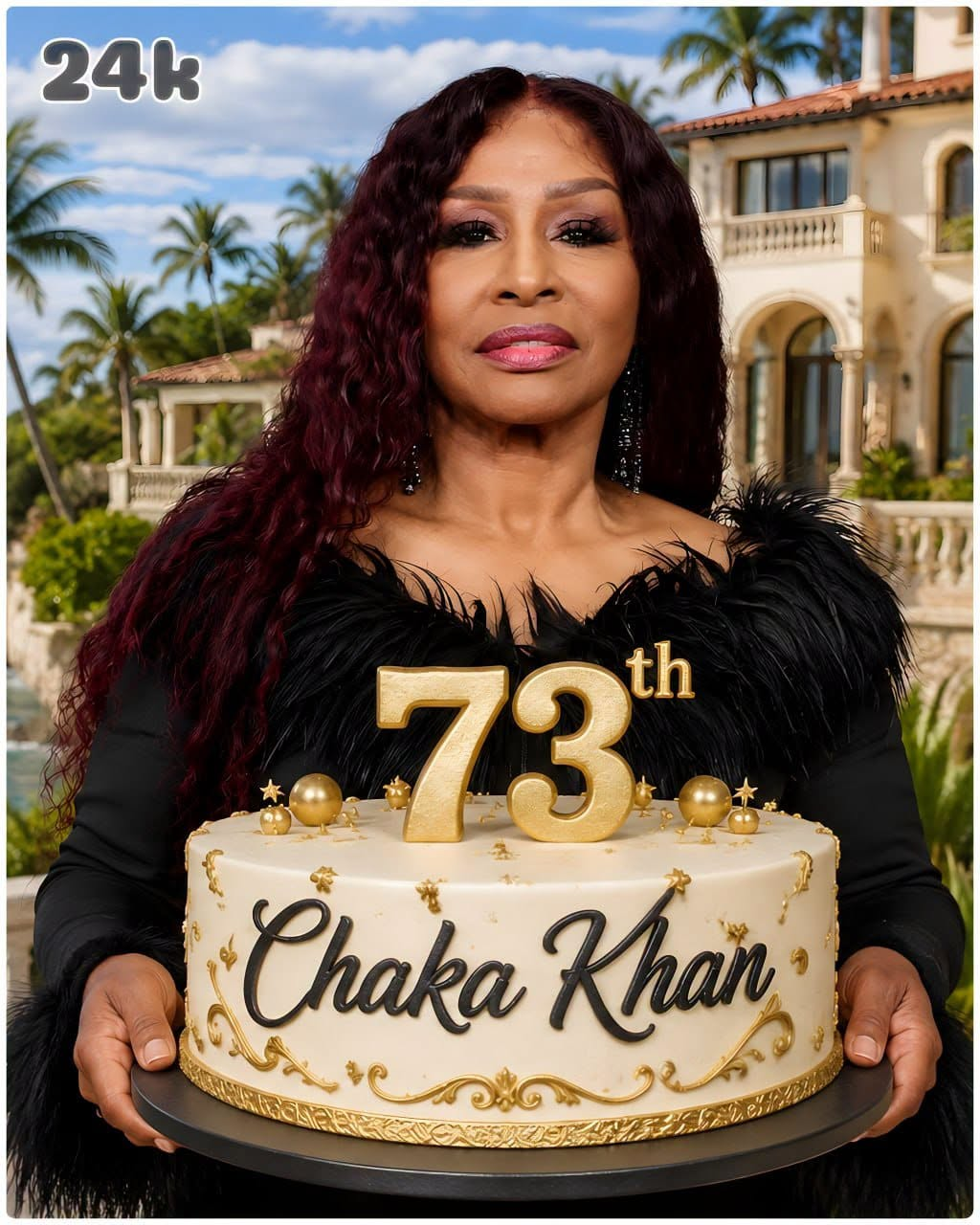
A birthday-themed portrait featuring a white-and-gold cake marked “73rd” offers a fitting opportunity to look back at her remarkable journey. Although the image alone does not establish that it documents an actual birthday celebration, the number is consistent with Khan’s age in 2026. She was born on March 23, 1953.
So, what makes Chaka Khan such an enduring figure in music? The answer lies in her distinctive voice, her willingness to experiment with different styles, and the songs that continue to connect with listeners today.
Who Is Chaka Khan?
Born Yvette Marie Stevens in Chicago, Illinois, Chaka Khan became one of the most recognizable voices in American music. She first gained widespread attention as the lead singer of the funk band Rufus during the 1970s.
Khan stood out for her ability to combine vocal power with emotional expression. She could deliver an energetic funk performance, a soulful ballad, or a rhythm-driven pop song without losing her distinctive sound.
Her career eventually expanded beyond Rufus into a successful solo journey. Over the years, she has explored R&B, funk, jazz, disco, pop, and other musical styles.
The Rock & Roll Hall of Fame recognized her contributions in 2023, inducting her in the Musical Excellence category. That honor reflected the importance of her work and its influence on the broader music industry.
How Rufus Helped Launch Her Career
Before becoming a solo superstar, Khan rose to prominence with Rufus, a Chicago-based band known for blending funk, soul, and rock influences.
One of the group’s defining songs was “Tell Me Something Good,” written by Stevie Wonder. The track became a major breakthrough and earned Rufus a Grammy Award in 1975.
Khan’s voice was central to the group’s identity. Her expressive delivery brought intensity and personality to its music, helping Rufus stand out during a period when funk and soul were evolving rapidly.
Other notable songs associated with Rufus and Khan include “Sweet Thing” and “Ain’t Nobody.” These recordings helped establish her reputation as a vocalist capable of delivering both irresistible rhythms and deeply felt performances.
Her years with Rufus provided the foundation for a solo career that would take her music to an even wider audience.
The Solo Hits That Made Her a Household Name
Khan’s success did not depend on one musical era or one signature recording. Instead, she built a catalogue of songs that reached different audiences and demonstrated her versatility.
“I’m Every Woman”
Released in 1978, “I’m Every Woman” became one of Khan’s defining solo recordings. Its confident message and celebratory sound made it an enduring anthem.
The song’s appeal extends beyond its original release. Whitney Houston later recorded a widely recognized version for The Bodyguard soundtrack, introducing the song to another generation of listeners.
“I Feel for You”
Khan reached another major milestone with “I Feel for You” in 1984. Written by Prince, her version incorporated contemporary electronic production, a harmonica performance by Stevie Wonder, and a rap contribution from Grandmaster Melle Mel.
The combination brought together different musical elements at a time when popular music was changing quickly. The recording demonstrated Khan’s ability to adapt while maintaining her distinctive vocal identity.
“Ain’t Nobody”
Recorded with Rufus, “Ain’t Nobody” became one of her most recognizable performances. Its smooth groove, memorable melody, and emotional delivery have helped it remain popular long after its original release.
Together, these songs illustrate why Khan’s catalogue continues to attract listeners across age groups.
Why Chaka Khan’s Voice Is So Distinctive
A memorable voice is not simply about reaching high notes or singing loudly. It is also about tone, timing, phrasing, and the ability to communicate emotion.
Khan brings all these qualities to her performances. Her voice can sound powerful and commanding one moment, then intimate and vulnerable the next.
Her musical range has also allowed her to work with artists from different backgrounds and genres. Throughout her career, she has collaborated with musicians including Prince, Stevie Wonder, Miles Davis, and Mary J. Blige.
Rather than being confined to one category, Khan has repeatedly explored new arrangements and sounds. This willingness to experiment has helped her remain relevant through major changes in the music industry.
A Fashion Style as Bold as Her Music
The birthday portrait highlights another part of Khan’s public image: her distinctive fashion sense.
The pictured outfit features black feathers, dramatic earrings, and long burgundy hair. The cake adds gold lettering and decorative details against a white background, creating a luxurious visual theme.
These details give the image a celebratory, glamorous appearance. However, the portrait should not be treated as verified evidence of a particular event or outfit worn by Khan in real life.
More broadly, Khan’s stage presence has long been associated with individuality and confidence. Her image complements the expressive quality of her music, helping make her recognizable beyond her recordings.
For fans, that combination of voice, personality, and style is part of what makes her such a compelling performer.
Awards and Recognition Throughout Her Career
Khan’s achievements extend beyond chart success. Her official Grammy artist profile lists 10 Grammy wins from 22 nominations, while the Rock & Roll Hall of Fame recognizes her contributions through its Musical Excellence category.
These honors reflect a career that has crossed genres and generations. Her work with Rufus helped define an important period in funk and soul, while her solo recordings demonstrated how those traditions could evolve alongside pop and electronic music.
Her influence can also be heard in the work of later performers who draw on the expressive vocals, rhythmic confidence, and genre-crossing creativity that helped define her sound.
Awards tell only part of the story, of course. The continued popularity of her signature songs is another measure of her lasting impact.
Why Her Music Still Matters Today
Music can remain relevant because it connects with listeners emotionally, not simply because it once topped the charts.
Khan’s songs explore confidence, love, independence, joy, and vulnerability. Those themes remain familiar to audiences today, even as musical trends change.
Her recordings also connect different eras of popular music. Longtime fans may remember hearing Rufus on the radio, while younger listeners may discover Khan through playlists, films, samples, live performances, or later versions of her songs.
That continued discovery helps keep her music in circulation. A great song can find a new audience decades after its first release, and Khan’s catalogue offers several examples of that enduring appeal.
Her career is also a reminder that successful artists do not always fit neatly into a single genre. By moving between funk, soul, R&B, jazz, and pop, she built a musical identity that was both recognizable and adaptable.
Frequently Asked Questions
1. How old is Chaka Khan in 2026?
Chaka Khan was born on March 23, 1953. She turned 73 on March 23, 2026.
2. What is Chaka Khan best known for?
She is best known for her powerful voice, her work with Rufus, and solo hits including “I’m Every Woman” and “I Feel for You.” “Ain’t Nobody” is another signature song associated with her work with Rufus.
3. Was Chaka Khan the lead singer of Rufus?
Yes. Khan became widely known as the lead vocalist of Rufus in the 1970s before establishing an acclaimed solo career.
4. Has Chaka Khan been inducted into the Rock & Roll Hall of Fame?
Yes. She was inducted in 2023 in the Musical Excellence category.
5. Is the birthday photograph proof of an official celebration?
No. The image depicts Khan holding a cake marked “73rd,” but the picture alone does not verify when, where, or whether an actual celebration took place.
Conclusion: A Legacy That Goes Beyond One Birthday
Chaka Khan’s story is about much more than a milestone age or a glamorous portrait. It is the story of an artist whose distinctive voice helped shape funk, soul, R&B, and pop across multiple generations.
From her breakthrough with Rufus to solo classics such as “I’m Every Woman” and “I Feel for You,” she has continued to demonstrate the power of musical individuality.
The gold-and-white birthday image offers a visual reminder to celebrate a remarkable career, but her recordings provide the strongest evidence of her lasting influence.
Whether listeners first discovered her music decades ago or are hearing it for the first time today, Chaka Khan’s voice remains a defining part of popular music history.