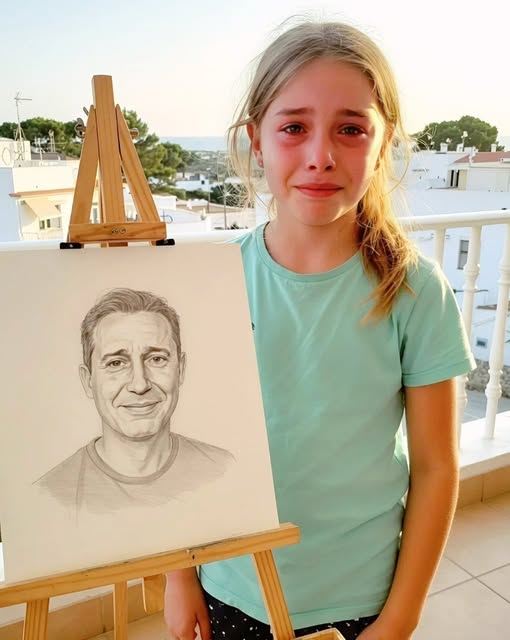
A pencil portrait may look simple at first glance, but creating a convincing drawing of a human face requires observation, patience, and attention to detail. A few carefully placed lines can suggest the shape of a nose, while subtle shading can make cheeks, eyes, and other features appear three-dimensional.
A photograph of a young girl standing beside a pencil portrait offers an opportunity to appreciate this traditional art form. The image shows a drawing of a man displayed on an easel, with the artist’s identity and the story behind the portrait remaining unknown.
Even without knowing the personal history behind the artwork, we can explore what makes portrait drawing so interesting, how artists develop their skills, and why small details can make such a difference.
Why Pencil Portraits Continue to Fascinate People
Portraiture has a long history in art. Artists have used different materials and techniques to represent human faces, from traditional paintings to charcoal studies and modern digital illustrations.
Pencil drawing remains popular because it is accessible, versatile, and capable of producing a wide range of effects.
A graphite pencil can create delicate outlines, soft shadows, dark accents, and gradual tonal transitions. Artists can also adjust the pressure they apply to control how light or dark a mark appears.
Unlike some forms of art that rely heavily on color, graphite portraits emphasize shape, light, texture, and contrast. This makes them particularly useful for studying the structure of the human face.
A successful portrait does not necessarily require elaborate materials. Often, the most important tools are careful observation, suitable pencils, quality paper, and a willingness to practice.
What Makes a Pencil Portrait Look Realistic?
Realistic portrait drawing involves several interconnected skills. Artists must understand the overall proportions of the face while also paying attention to the smaller features that give each person a distinctive appearance.
1. Observing Facial Proportions
Before drawing individual details, artists often establish the general shape and proportions of the head.
They observe the relative positions of the eyes, nose, mouth, ears, and jawline. Light construction lines can help organize these features before darker marks are added.
These guidelines are not rigid formulas. Facial proportions vary between individuals, and the angle of the head can change how features appear.
For beginners, concentrating on the relationships between shapes is often more useful than trying to draw each feature independently.
2. Creating Depth With Shading
One of the most important techniques in pencil portraiture is shading.
A face contains areas that receive different amounts of light. Depending on the lighting, shadows may appear beneath the nose, around the eye sockets, under the lower lip, and along the sides of the face.
Artists use differences in tone to suggest these changes in surface and form.
Building shading gradually allows greater control than applying heavy pressure immediately. Light layers can be adjusted as the drawing develops, helping create smoother transitions between illuminated and shadowed areas.
The objective is not simply to make some areas dark. It is to understand how light interacts with the shapes being drawn.
3. Paying Attention to the Eyes
Eyes are often an important focal point in a portrait because they contain several distinct shapes and tonal differences.
Artists observe the eyelids, surrounding shadows, iris, pupil, and small areas of reflected light.
However, adding more detail does not automatically make a portrait more realistic. The placement, size, and relationship of the eyes to the rest of the face are equally important.
A useful exercise is to study the eyes as part of the whole head rather than treating them as separate symbols.
4. Drawing Hair and Clothing
Hair can be challenging because it contains many overlapping strands and areas of light and shadow.
Instead of drawing every individual strand, artists often begin by identifying larger sections of hair. They then add selected lines and tonal variations to suggest texture.
Clothing follows a similar principle. Folds and shadows help communicate how fabric hangs over the shoulders and chest.
Observing larger shapes first helps keep the portrait coherent and prevents unnecessary details from overwhelming the drawing.
How Beginners Can Start Drawing Portraits
Learning to draw a realistic face can feel difficult at first, but the process becomes more manageable when divided into smaller tasks.
Start with simple shapes. Practice drawing ovals, curved lines, and basic head outlines before attempting complex portraits.
Use a reference. A photograph can help you study proportions and lighting. Choose an image with clear facial features and relatively simple lighting.
Work from light to dark. Begin with faint guidelines and gradually strengthen the lines that need emphasis.
Compare proportions regularly. Step back from the drawing and examine the relationship between the major features. This can reveal inconsistencies that are difficult to notice when working very close to the page.
Practice individual features. Spend time studying eyes, noses, mouths, ears, and hair before combining them into complete portraits.
Be patient with mistakes. Drawing involves observation and correction. An imperfect first attempt is a normal part of developing artistic skills.
Regular, focused practice can help beginners become more comfortable with shapes, tonal values, and facial structure.
What Gives a Portrait Its Character?
A portrait is more than a collection of correctly drawn features. The way those features are arranged, shaded, and emphasized influences the overall impression of the image.
Small differences in the eyebrows, mouth, eyes, and head position can affect how a face is perceived.
Lighting also plays an important role. Strong directional light can create pronounced shadows, while softer illumination produces gentler transitions.
The choice of drawing style matters, too. Some artists prefer highly detailed realism, while others simplify features to create expressive or stylized portraits.
Neither approach is automatically superior. The best choice depends on the artist’s intentions and the qualities they want to emphasize.
A portrait may aim to record a recognizable likeness, explore facial structure, communicate a particular mood, or demonstrate technical skill.
Without knowing the artist’s intentions, viewers should avoid assuming what a particular drawing is meant to communicate.
How to Appreciate a Hand-Drawn Portrait
Looking carefully at a portrait can reveal the decisions that went into creating it.
Begin by observing the overall shape of the head. Notice how the artist positions the features and balances the proportions.
Next, look at the shading. Are the transitions smooth or sharply defined? Where are the darkest areas? How does the artist suggest the shape of the cheeks, forehead, and chin?
Finally, consider the details. Observe the treatment of the hair, clothing, and smaller facial features.
The photograph accompanying this article shows a pencil portrait displayed on an easel beside a young girl. Although the circumstances behind the drawing are unknown, the image invites viewers to pay attention to the artwork itself and consider the skill involved in translating a human face into graphite on paper.
Frequently Asked Questions
1. What pencils are best for portrait drawing?
A range of graphite pencils can be useful. Harder pencils, such as H or 2H, can produce lighter marks, while softer pencils, such as 2B, 4B, or 6B, can create darker tones. The best combination depends on the artist’s technique and the paper being used.
2. How long does it take to learn realistic portrait drawing?
There is no single timeline. Progress depends on practice, previous experience, observation skills, and the complexity of the drawing. Beginners can start with simple studies and gradually develop greater control.
3. Is it better to draw from a photograph or from life?
Both approaches offer useful learning opportunities. Photographs provide a fixed reference, while drawing from life helps artists observe three-dimensional forms and changing light directly.
4. How can I make a pencil portrait look less flat?
Study the distribution of light and shadow. Use gradual tonal changes to describe the shapes of the face, and check the proportions before adding extensive detail.
5. Do I need expensive materials to begin drawing portraits?
No. A few graphite pencils, a suitable eraser, and reasonably smooth drawing paper are enough to begin learning the fundamentals. Skill develops through observation and practice rather than equipment alone.
Conclusion: The Beauty of Seeing More Carefully
Pencil portraiture demonstrates how observation and technique can transform a blank sheet of paper into a recognizable human face.
Proportions provide structure, shading creates depth, and carefully observed details help establish individuality. Together, these elements allow artists to explore the complexity of the human face using a remarkably simple medium.
The photograph of a young girl standing beside a portrait is a reminder that artwork can invite curiosity even when its personal story is unknown.
Whether someone is an experienced artist or a complete beginner, portrait drawing offers an opportunity to slow down, observe carefully, and develop a deeper appreciation for the details that make every face distinctive.
Sometimes, the most interesting part of a pencil portrait is not the number of lines on the page, but how thoughtfully those lines have been used.