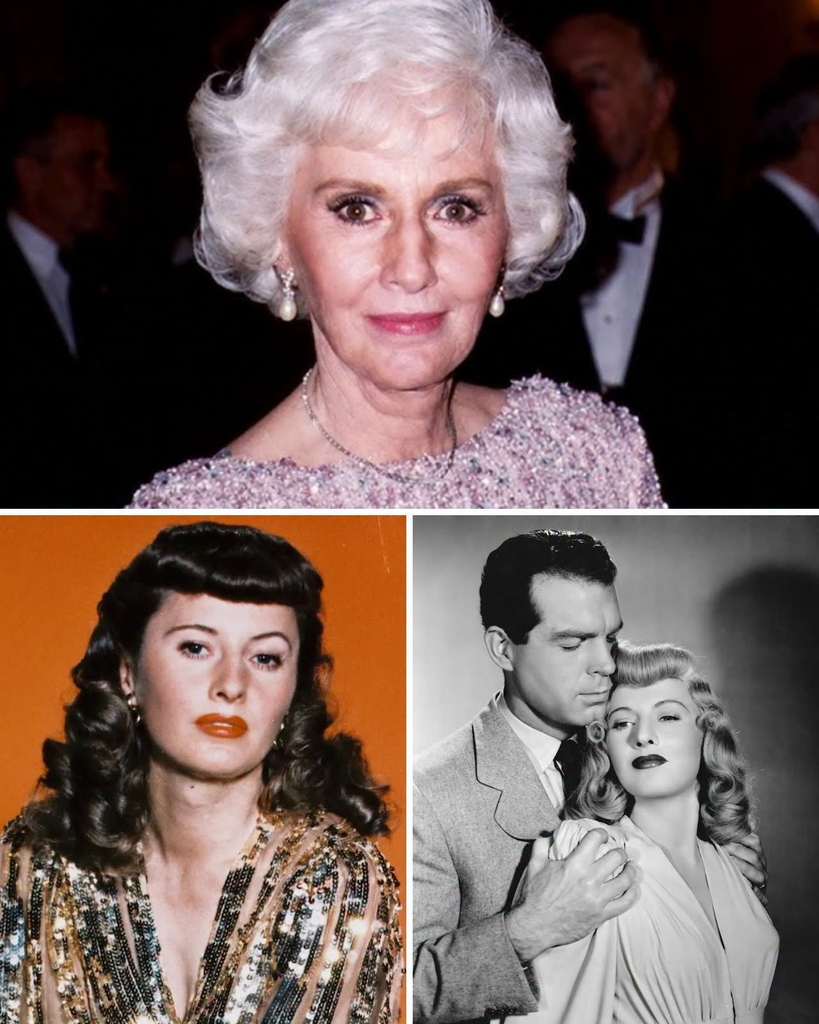
Classic Hollywood produced countless glamorous stars, but few built careers as versatile and enduring as Barbara Stanwyck. Known for her sharp intelligence, commanding screen presence, and ability to portray complicated women, she became one of the most respected actresses of her generation.
Photographs of Stanwyck across different stages of her life reveal the changing styles of Hollywood, from the polished glamour of its golden age to the more understated elegance of later decades. Yet her greatest legacy was never simply her appearance. It was her ability to make characters feel convincing, even when their choices were difficult or morally complicated.
Her journey from a challenging childhood in Brooklyn to major film roles and award-winning television performances remains an important chapter in American entertainment history.
From Ruby Stevens to Barbara Stanwyck
Barbara Stanwyck was born Ruby Catherine Stevens on July 16, 1907, in Brooklyn, New York. Her early life was marked by hardship. She lost her mother when she was young, and her father subsequently left the family. She was raised in part by her older sister and had to become independent early.
Rather than following a conventional route into the entertainment industry, Stanwyck worked while pursuing opportunities in performance. She developed an interest in dancing and appeared in stage productions before turning her attention to acting.
Her professional journey began in New York’s theatrical world. In 1926, she gained attention for her performance in the Broadway play The Noose. The experience helped establish her as a performer capable of holding an audience’s attention.
She subsequently moved into films, making her screen debut in Broadway Nights in 1927. As Hollywood transitioned from silent movies to sound films, Stanwyck adapted to the changing industry and began developing the direct, naturalistic acting style that would become her trademark.
Building a Career in Hollywood
During the early 1930s, Stanwyck appeared in a succession of films that demonstrated her range. She could portray ambitious working women, vulnerable characters, determined outsiders, and individuals navigating difficult social circumstances.
One of her early notable films was Baby Face (1933), in which she played Lily Powers, a woman who uses her intelligence and relationships to improve her position in a world that offers her few easy opportunities.
The role reflected a recurring feature of Stanwyck’s career: she often played women who acted decisively rather than simply reacting to the people around them.
In Stella Dallas (1937), she portrayed a mother whose love for her daughter leads her to make painful personal sacrifices. Her performance earned her an Academy Award nomination for Best Actress.
These roles helped establish her as more than a conventional screen beauty. Stanwyck could bring emotional depth to characters who were flawed, determined, ambitious, or misunderstood.
The Film That Became a Hollywood Classic
One of Stanwyck’s most celebrated performances came in Billy Wilder’s Double Indemnity (1944).
She played Phyllis Dietrichson, a married woman who draws an insurance salesman, played by Fred MacMurray, into a murder plot. The film became a landmark of film noir, a style known for its shadowy cinematography, moral ambiguity, suspense, and characters caught in dangerous situations.
Stanwyck’s performance helped define the screen image of the femme fatale: a woman whose intelligence, charm, and ambition make her both compelling and dangerous.
What made her portrayal memorable was its control. Rather than relying solely on dramatic gestures, she created tension through her expressions, dialogue, and interactions with other characters.
Her work in Double Indemnity earned her another Academy Award nomination. Although she never won a competitive Oscar for acting, the film remains a central part of her legacy.
She also demonstrated her comic abilities in The Lady Eve (1941), opposite Henry Fonda, and Ball of Fire (1941), opposite Gary Cooper. These performances showed that she could move comfortably between suspense, romance, and comedy.
A Star Who Refused to Be Typecast
Stanwyck’s career is especially interesting because she did not remain tied to one genre.
She appeared in melodramas, romantic comedies, crime dramas, and westerns. In Sorry, Wrong Number (1948), she played a woman who becomes entangled in a frightening mystery through a telephone conversation. The performance earned her another Academy Award nomination.
By the 1950s, the film industry was changing. Television was attracting growing audiences, and established movie stars had to decide how to respond to the new medium.
Stanwyck made the transition successfully.
Rather than treating television as a step backward, she used it to continue performing substantial roles and reaching audiences who might not have followed her earlier films.
Her career demonstrated that an actor’s longevity can depend on flexibility as much as fame. She was willing to explore new formats and adapt to changing audience expectations.
Finding a New Audience on Television
Stanwyck became a familiar television presence through projects including The Barbara Stanwyck Show and the western series The Big Valley.
In The Big Valley, which ran from 1965 to 1969, she played Victoria Barkley, the strong-willed matriarch of a prosperous California ranching family. The role brought her to viewers who knew her primarily through television rather than her earlier film work.
Her television success was recognized with Emmy Awards. She won for The Barbara Stanwyck Show in 1961 and for The Big Valley in 1966.
She later earned renewed acclaim for her performance as Mary Carson in the 1983 miniseries The Thorn Birds, winning another Emmy.
That late-career achievement was especially significant because it demonstrated her continuing ability to command attention long after the height of her movie-star fame.
Recognition Beyond Her Screen Roles
Stanwyck received four competitive Academy Award nominations for Best Actress: for Stella Dallas, Ball of Fire, Double Indemnity, and Sorry, Wrong Number.
In 1982, she received an Academy Honorary Award recognizing her contribution to screen acting. The honor acknowledged a career distinguished by versatility, professionalism, and a remarkable body of work.
She also received the American Film Institute’s Life Achievement Award in 1987.
These honors reflected the breadth of her career. Stanwyck was not celebrated for one defining role alone. Her reputation rested on decades of performances across different genres and entertainment formats.
The Legacy of Barbara Stanwyck
Barbara Stanwyck died on January 20, 1990, at the age of 82. Her career had stretched across major changes in American entertainment, from early sound cinema to television’s rise as a dominant medium.
Today, her films remain valuable examples of classic Hollywood acting. Double Indemnity continues to be studied and celebrated as a film noir landmark, while The Lady Eve, Stella Dallas, and Sorry, Wrong Number showcase different sides of her talent.
The photographs that preserve her image offer a visual reminder of Hollywood’s changing fashions and styles. But the performances are what keep her work alive.
Stanwyck’s characters were rarely simple. They could be ambitious, vulnerable, resourceful, stubborn, funny, or morally conflicted. She gave them a sense of individuality that made audiences interested in what they would do next.
Her story is ultimately about the power of a long, adaptable career. She began as a young performer seeking opportunities, became a major film star, and later earned new recognition on television.
More than three decades after her death, Barbara Stanwyck remains an enduring figure in classic Hollywood—not merely for the glamour captured in photographs, but for the intelligence and humanity she brought to the screen.
Frequently Asked Questions
1. Who was Barbara Stanwyck?
Barbara Stanwyck was an American film and television actress born Ruby Catherine Stevens in Brooklyn, New York, in 1907. She became known for her versatility and performances in films such as Double Indemnity, The Lady Eve, and Stella Dallas.
2. What is Barbara Stanwyck’s most famous movie?
Double Indemnity (1944) is among her best-known films. Her portrayal of Phyllis Dietrichson helped make the film a defining example of classic film noir.
3. Did Barbara Stanwyck win an Academy Award?
She received four competitive Academy Award nominations for Best Actress but did not win a competitive acting Oscar. She received an Academy Honorary Award in 1982 for her contribution to screen acting.
4. Was Barbara Stanwyck successful on television?
Yes. She won Emmy Awards for The Barbara Stanwyck Show, The Big Valley, and later The Thorn Birds, demonstrating her success beyond theatrical films.
5. When did Barbara Stanwyck die?
Barbara Stanwyck died on January 20, 1990, at the age of 82.
Conclusion
Barbara Stanwyck’s life and career offer a compelling look at the evolution of Hollywood itself. She moved from stage performance to early sound films, became a leading actress in some of cinema’s most memorable dramas and comedies, and then found success with television audiences.
Her lasting influence comes from the strength of her performances and her refusal to be limited to a single type of role. The photographs may capture her changing appearance, but her work reveals what made her exceptional: a distinctive screen presence, remarkable range, and the ability to make complex characters unforgettable.