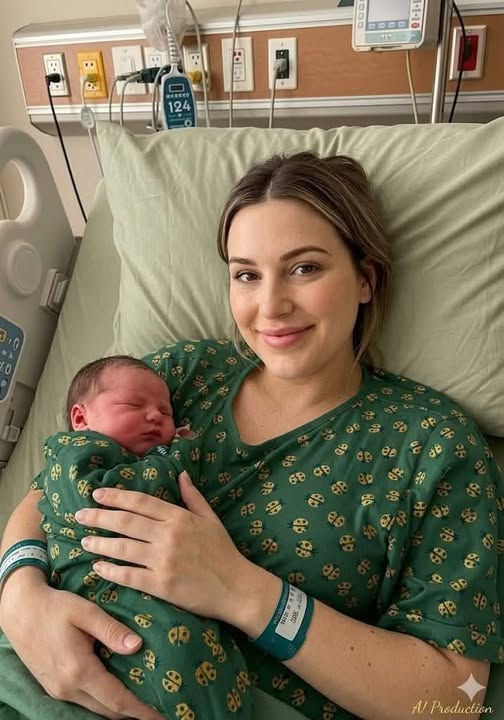
There is something deeply moving about seeing a parent hold a newborn baby. In a photograph like this one, the mother’s gentle smile, the baby’s peaceful expression, and the quiet hospital setting capture a moment associated with new beginnings.
The image shows a woman resting in a hospital bed while cradling a tiny newborn wrapped in a green blanket. Although we do not know their identities or the circumstances surrounding the birth, the scene offers an opportunity to explore something many families experience: the excitement, tenderness, and uncertainty that can accompany the arrival of a baby.
The first days of parenthood are not always effortless. Alongside moments of happiness, parents may have questions about feeding, sleep, recovery, and how to understand their baby’s needs. Learning a few essential newborn-care practices can help families approach this transition with greater confidence.
Why Early Bonding With a Newborn Matters
Bonding is the process through which a parent and baby begin developing a relationship. It can grow through holding, gentle touch, feeding, eye contact, talking, and responding to a baby’s cues.
For some parents, feelings of connection appear immediately. Others need more time, particularly when they are recovering from childbirth, experiencing exhaustion, or adjusting to unexpected circumstances. Both experiences can be normal.
Parents do not need to feel an instant, overwhelming connection to be caring and attentive. Relationships develop through repeated interactions and everyday care.
UNICEF Parenting explains that holding, soothing, talking to, and making eye contact with a baby can help caregivers build connections while supporting early development.
The important lesson is that bonding is not a single event that must happen perfectly in the delivery room. It is an ongoing process that continues as parents learn to recognize and respond to their child’s needs.
The Benefits of Skin-to-Skin Contact
One practice encouraged in maternity care is skin-to-skin contact. This means placing a newborn directly against a parent’s bare chest, with appropriate positioning and supervision.
The World Health Organization (WHO) recommends early skin-to-skin contact for newborns when appropriate. This practice can help babies maintain their body temperature, support early breastfeeding, and encourage interaction between parent and baby.
Skin-to-skin contact is especially relevant during the first hours after birth, but families can also discuss opportunities for continued contact with their healthcare team.
The CDC notes that skin-to-skin care immediately after delivery is encouraged for medically stable mothers and newborns. Appropriate positioning and observation are important to help keep the baby safe.
Not every birth follows the same course. A parent or baby may need medical attention, monitoring, or additional support before skin-to-skin contact is possible. When that happens, families should follow the guidance of their healthcare professionals.
Sources: WHO guidance on breastfeeding support and CDC guidance on maternity care.
Feeding a Newborn: Finding the Right Support
Feeding is one of the main responsibilities during the newborn period. Some parents breastfeed, some use infant formula, and others use a combination depending on their circumstances and medical guidance.
For parents who choose to breastfeed, early assistance can be valuable. A maternity nurse, midwife, lactation consultant, or other qualified healthcare professional can help with positioning, latch, feeding cues, and common difficulties.
The WHO recommends supporting mothers to initiate breastfeeding as soon as possible after birth when appropriate, ideally within the first hour. However, medical circumstances and individual needs can affect how feeding begins.
New parents should feel comfortable asking questions if a baby struggles to feed, seems unusually sleepy, or has fewer wet diapers than expected. Healthcare professionals can help assess whether feeding is progressing appropriately.
There is no need for parents to navigate every challenge alone. Seeking help early can make feeding less stressful and help families understand what their particular baby needs.
Understanding a Newborn’s Cues
Newborns cannot explain their needs with words, but they communicate through movements, facial expressions, sounds, and changes in behavior.
A baby may turn toward a touch near the mouth, move their hands toward their face, or become more active when hungry. Crying can also signal hunger, discomfort, tiredness, or a need for attention, although it does not always identify the cause.
Parents gradually learn to recognize their baby’s individual patterns. Gentle observation, regular feeding opportunities, and responding to cues can help build confidence.
Simple interactions also matter. Speaking softly, making eye contact when the baby is alert, and gently comforting them can become part of everyday care.
Every baby is different, so there is no single schedule or behavior that applies perfectly to all newborns. If a baby is difficult to wake, has breathing problems, develops a fever, or shows other concerning symptoms, parents should seek prompt medical advice.
Safe Sleep Is an Essential Part of Newborn Care
Holding a baby can be a comforting experience, but safe sleep practices are essential whenever the baby is sleeping.
The U.S. Centers for Disease Control and Prevention recommends placing babies on their backs for every sleep, including naps and nighttime sleep. Babies should sleep on a firm, flat surface designed for infant sleep, such as an approved crib or bassinet with a fitted sheet.
Keep pillows, loose blankets, stuffed toys, and other soft objects out of the baby’s sleep space.
Room-sharing, with the baby sleeping in their own separate sleep space, is recommended. An adult bed, sofa, or armchair is not a safe place for an infant to sleep with a caregiver.
If a parent feels sleepy while holding a baby, the safest step is to place the baby in their crib or bassinet before the parent falls asleep.
These precautions are important even when a newborn appears peaceful and comfortable.
For more information, consult the CDC’s safe sleep recommendations.
Supporting a New Mother After Birth
The arrival of a baby also marks a period of physical and emotional adjustment for the person who has given birth.
Recovery may involve soreness, fatigue, changes in sleep, and learning how to care for a newborn while meeting personal needs. Some parents feel joyful and energized, while others experience worry, sadness, or emotional ups and downs.
Practical support can make a difference. Partners, relatives, and friends can help by preparing meals, assisting with household tasks, offering to hold the baby while the parent rests, or accompanying the family to appointments.
It is also important to respect the parent’s preferences. Rather than assuming what would help, ask whether they would appreciate a meal, a visit, help with chores, or some quiet time.
Persistent sadness, intense anxiety, feelings of hopelessness, or difficulty functioning deserve attention from a healthcare professional. Postpartum mental health difficulties are treatable, and parents should not feel ashamed about asking for help.
Supporting a newborn includes supporting the adults who care for them.
Frequently Asked Questions
1. When does bonding with a newborn begin?
Bonding may begin during pregnancy, at birth, or gradually over the following days and weeks. There is no single deadline for developing a close relationship with a baby.
2. Is skin-to-skin contact beneficial after birth?
Yes. When medically appropriate and performed safely, skin-to-skin contact can support temperature regulation, early feeding, and interaction between parent and baby.
3. How can parents comfort a newborn?
Try checking whether the baby is hungry, tired, too warm or cold, or needs a diaper change. Gentle holding, quiet talking, and soothing movements may help. Seek medical advice if the baby’s behavior is concerning.
4. How should a newborn sleep safely?
Place the baby on their back on a firm, flat infant sleep surface. Keep loose bedding, pillows, and toys out of the sleep area, and use a separate sleep space in the parents’ room.
5. When should new parents contact a healthcare professional?
Contact a healthcare professional about feeding difficulties, concerns about weight gain, unusual behavior, or symptoms that worry you. A newborn with a temperature of 100.4°F (38°C) or higher needs immediate medical evaluation, especially during the first three months of life.
Conclusion: Building a Connection One Moment at a Time
A photograph of a mother holding her newborn can remind us that the beginning of parenthood is made up of many small experiences: a gentle touch, a feeding, a quiet conversation, or the comfort of having someone nearby.
These moments do not need to be perfect to matter. Parents learn through experience, babies have individual needs, and families often discover their own rhythms along the way.
Early bonding, appropriate feeding support, safe sleep practices, and compassionate care all contribute to a healthier start. Just as importantly, new parents deserve patience, encouragement, and support as they recover and adjust.
The first days with a newborn can bring many questions, but families do not have to know everything immediately. With reliable guidance and caring support, they can take each day as it comes and build their relationship with their baby over time.