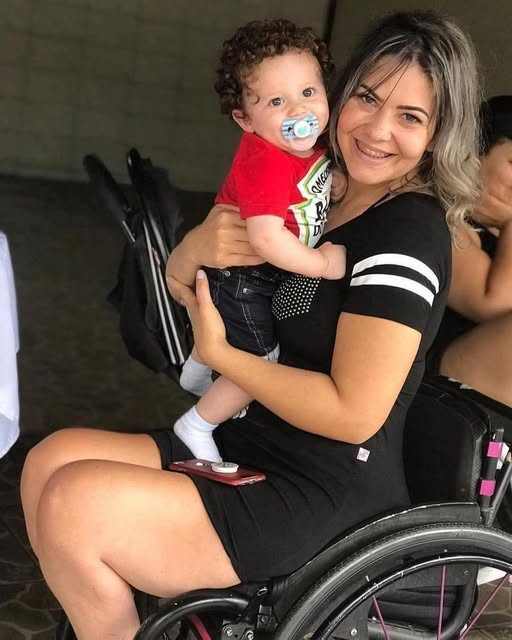
A photograph can sometimes communicate something that words struggle to explain. In this picture, a smiling woman sitting in a wheelchair holds a young child close to her. The child wears a red shirt and has a pacifier, while the woman looks directly at the camera with a warm smile.
It is a simple everyday moment, but it opens the door to a much bigger conversation about disability, family life, parenting, and inclusion.
For many people, seeing someone using a wheelchair while holding a child may challenge traditional assumptions about what parenting looks like. However, family life comes in many forms, and physical disability does not automatically prevent someone from building meaningful relationships or participating in everyday family activities.
The photograph does not tell us the woman’s personal story or her relationship with the child. Nevertheless, it provides an opportunity to explore an important subject: why people with disabilities deserve the same respect, opportunities, and support as everyone else.
1. Family Life Comes in Many Different Forms
There is no single definition of what a family should look like.
Some families include two parents, others have one parent, and many include grandparents, relatives, guardians, or other important caregivers. Every family has its own experiences, routines, and challenges.
Disability is another part of the diversity that exists within families.
A person who uses a wheelchair can still participate in family activities, develop meaningful relationships, provide emotional support, and enjoy important moments with children.
The presence of a wheelchair does not tell us everything about someone’s abilities, personality, or family responsibilities.
It is important to look beyond physical appearances and recognize people as individuals.
2. Understanding Parenthood and Physical Disability
One common misconception is that physical disability automatically makes parenting impossible.
In reality, people with physical disabilities have different abilities, needs, and circumstances. Some may need assistance with certain daily activities, while others may manage most parenting responsibilities independently.
Parenting is not based on physical strength alone.
It involves emotional connection, patience, communication, encouragement, responsibility, and countless everyday interactions.
A parent might read bedtime stories, help with schoolwork, comfort a child, prepare meals, or participate in family activities using approaches that suit their circumstances.
Some activities may require adaptive equipment, adjustments to the home, or additional support.
The important point is that disability should not automatically determine whether someone can be a loving and capable parent.
3. Accessibility Makes a Real Difference
Accessibility is one of the most important factors in helping people with disabilities participate fully in family life.
Consider an ordinary family outing. A family might want to visit a shopping center, restaurant, playground, park, or community event.
If the location has stairs without an accessible alternative, narrow entrances, inaccessible restrooms, or unsuitable pathways, someone using a wheelchair may face unnecessary difficulties.
These barriers are not necessarily caused by the person’s disability. They can result from environments that were not designed to accommodate different needs.
Accessible spaces help everyone participate more comfortably.
Important improvements can include:
- Step-free entrances and suitable ramps.
- Wider doorways and accessible pathways.
- Elevators where necessary.
- Accessible restrooms and changing facilities.
- Family-friendly public transportation.
- Playgrounds designed for children with different abilities.
Small improvements can make a meaningful difference to families.
Accessibility should not be treated as a luxury. It is an important part of creating communities where everyone can participate.
4. The Importance of Adaptive Parenting Solutions
People with physical disabilities may develop different ways of completing everyday parenting tasks.
Depending on individual needs, adaptive solutions might include specially designed baby-changing stations, accessible cribs, adjustable furniture, modified storage arrangements, or equipment that makes carrying and caring for a child more manageable.
Some parents may also benefit from assistance from family members, friends, or professional support services.
There is no universal solution because every person’s circumstances are different.
A 2026 review published in the journal Disability and Rehabilitation examined 25 publications covering 23 studies of parents with physical disabilities. It identified common experiences involving accessibility barriers, family and community support, adaptation, and resilience.
The review also highlighted how parents developed practical strategies to make parenting activities more accessible.
This research reinforces the importance of listening to disabled parents and understanding their individual experiences rather than making assumptions about what they can or cannot do.
5. Why Society Needs a Better Understanding of Disability
One of the biggest challenges faced by people with disabilities is not always physical. Sometimes, it is the way other people respond to them.
Unnecessary judgment, stereotypes, and incorrect assumptions can make ordinary situations more difficult.
For example, someone might assume that a person using a wheelchair cannot participate in certain activities without understanding their actual abilities.
Such assumptions can be discouraging and unfair.
A better approach begins with respect.
Instead of making assumptions, people can ask whether assistance is needed. Instead of focusing entirely on a wheelchair, they can recognize the person, their preferences, and their independence.
Families with disabled members should also be included in community events, educational activities, recreational opportunities, and public spaces.
Inclusion is not simply about allowing people to enter a building. It is about ensuring that they can participate meaningfully and feel welcome.
6. The Role of Family and Community Support
Support can make a significant difference in the experiences of people with disabilities.
Family members and friends may help with transportation, household activities, childcare arrangements, or other practical responsibilities.
However, support should not automatically mean taking away someone’s independence.
A person with a disability should be able to make their own decisions and express what kind of assistance they actually need.
Communities can contribute by improving accessibility, offering inclusive services, and providing reliable information about available resources.
Healthcare professionals, social workers, educators, and policymakers also have important roles in supporting families.
The National Council on Disability addressed these issues in its report, Rocking the Cradle: Ensuring the Rights of Parents with Disabilities and Their Children. The report examines the barriers that disabled parents face and emphasizes the importance of protecting their rights and ensuring fair treatment.
The broader message is clear: families should receive appropriate support based on their actual circumstances, not stereotypes about disability.
7. Every Child Deserves a Loving and Supportive Environment
Children benefit from growing up in environments where they feel safe, respected, and encouraged.
They also learn important lessons by observing how adults treat one another.
When children see people with different abilities participating in everyday life, they can develop a better understanding of diversity and inclusion.
They learn that people may communicate, move, or complete tasks differently while still sharing many of the same hopes, emotions, and experiences.
Parents, relatives, teachers, and communities can encourage these values through everyday conversations and actions.
Respect should begin early, and inclusion should become a normal part of everyday life.
8. Looking Beyond What We See in a Photograph
The photograph of a woman holding a child while sitting in a wheelchair is a reminder that appearances never tell an entire story.
We cannot determine someone’s personal experiences, family relationships, abilities, or challenges from one picture.
What we can do is recognize the importance of treating people with dignity.
The most meaningful conversations about disability should not focus only on limitations. They should also consider accessibility, opportunities, individual choices, and the support that helps people participate in everyday life.
A wheelchair is a mobility device, not a complete description of someone’s identity.
Every person deserves to be seen as more than one visible characteristic.
Frequently Asked Questions
1. Can someone who uses a wheelchair become a parent?
Yes. People who use wheelchairs can become parents. Their individual circumstances, abilities, support systems, and accessibility needs vary.
2. Can people with physical disabilities take care of children?
Many people with physical disabilities care for children successfully. Some use adaptive equipment, modified routines, or additional assistance depending on their needs.
3. What is adaptive parenting equipment?
Adaptive parenting equipment includes specially designed or modified products that help parents with disabilities perform everyday childcare activities more comfortably and safely.
4. Why is accessibility important for families with disabilities?
Accessibility allows family members to participate in everyday activities, visit public places, use essential services, and enjoy community life with fewer unnecessary barriers.
5. How can people support parents with disabilities?
People can help by respecting individual choices, asking before offering assistance, supporting accessible environments, challenging stereotypes, and listening to the experiences of disabled parents.
Conclusion: Inclusion Begins With Understanding
The photograph offers a simple but meaningful starting point for discussing disability, family relationships, and inclusion.
It reminds us that family life should not be judged by appearances or assumptions.
People who use wheelchairs deserve opportunities to build relationships, participate in their communities, and enjoy everyday experiences without unnecessary barriers.
True inclusion begins when society stops defining people by their disabilities and starts recognizing their individuality, abilities, and dignity.
A more accessible and understanding world benefits everyone.
Because everyone deserves the opportunity to experience family, connection, and belonging.