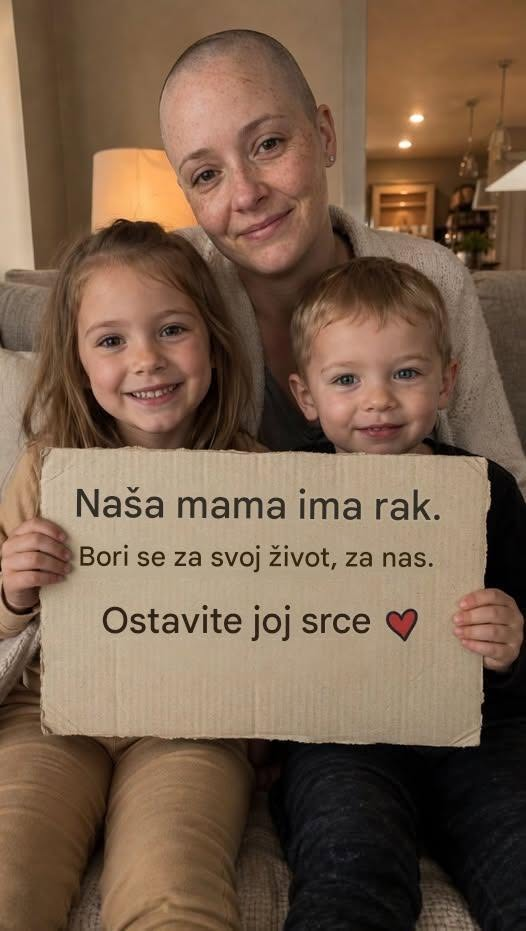
A mother sits on a sofa with two young children beside her. They hold a cardboard sign carrying a heartfelt message: “Our mom has cancer. She is fighting for her life, for us. Leave her a heart.”
The words are simple, but the subject is deeply personal. Cancer can affect much more than a person’s physical health. It can change family routines, create uncertainty, and leave parents wondering how to protect their children emotionally while navigating their own treatment and recovery.
The photograph does not independently confirm the woman’s diagnosis or circumstances. Nevertheless, it provides a meaningful starting point for discussing a situation many families face: how to support children when a parent has cancer, and how relatives, friends, and communities can help.
How a Cancer Diagnosis Can Affect the Whole Family
Hearing the word cancer can bring many emotions, including fear, sadness, confusion, anger, and uncertainty. Parents may have questions about treatment, appointments, finances, childcare, and how their lives might change.
Children can react differently depending on their age, personality, previous experiences, and understanding of illness. Some may ask many questions. Others may become quiet, cling more closely to a parent, struggle with sleep, or show frustration through changes in behavior.
The American Academy of Child and Adolescent Psychiatry explains that cancer in a parent can create emotional strain for children and that good family communication can help. Its guidance encourages parents to talk with children honestly and in ways they can understand.
Source: AACAP — Parents With Cancer: Tips for Talking to Kids.
It is important not to assume that every family will respond in the same way. Some children may appear to cope well at first and express their feelings later. Others may need additional reassurance or professional support.
Recognizing these differences can help families respond with patience rather than expecting children to react in a particular way.
Talking to Children About a Parent’s Cancer
One of the hardest responsibilities for a parent with cancer may be explaining the diagnosis to their children.
It can be tempting to hide the situation in an effort to protect them. However, children often notice changes in a parent’s appearance, energy, schedule, or emotions. Without clear explanations, they may create their own interpretations of what is happening.
The National Cancer Institute recommends honest, age-appropriate conversations that allow children to ask questions and express their feelings.
Source: National Cancer Institute — Talking to Children About Your Cancer.
Use simple, honest language
Young children do not need every medical detail. They do need an explanation that is truthful and appropriate for their age.
For example, a parent might explain that cancer is an illness, that doctors are helping with treatment, and that some days may look different because of appointments or side effects.
Avoid promising that everything will definitely be fine when the future is uncertain. Instead, explain what is known, what the medical team is doing, and who will care for the children.
Reassure children that they are not responsible
Children sometimes misunderstand illness and may privately worry that something they said, thought, or did caused it.
Parents and trusted adults can reassure them clearly that they did not cause the cancer. They should also explain that cancer is not something they can catch through ordinary contact with their parent.
Give children opportunities to ask questions
A single conversation may not answer everything. Children may return to the same question as they gradually understand the situation.
Allowing repeated questions and acknowledging feelings can help them feel heard. If a parent does not know an answer, it is acceptable to say so and seek reliable information together.
Helping Children Feel Safe When Family Life Changes
Cancer treatment can affect daily routines. A parent may need to spend time at a hospital, rest more frequently, or temporarily reduce certain activities.
Maintaining familiar routines where possible can provide children with a sense of stability.
Regular mealtimes, bedtime rituals, school attendance, play, and contact with friends can help preserve some normality during a stressful period.
When changes are unavoidable, explain them beforehand in simple terms. If another trusted adult will handle school pickup or bedtime, let the child know who will be there and what to expect.
Children should also have opportunities to continue enjoying their lives. Playing with friends, attending school activities, and pursuing hobbies are not signs that they care less about their parent. These experiences can provide important relief from worry.
The American Cancer Society offers additional guidance on helping children understand and cope when someone in their family has cancer.
Source: American Cancer Society — Helping Children When Someone They Know Has Cancer.
Practical Ways to Support a Family Facing Cancer
When someone is diagnosed with cancer, friends and relatives often want to help but may not know what to say or do.
A supportive gesture does not need to be dramatic. Often, specific offers of assistance are more useful than general promises.
Offer practical help
Treatment can involve appointments, transportation, meals, household responsibilities, and childcare. Ask the family which tasks would make the greatest difference.
For example, someone might offer to prepare dinner on a particular evening, take children to an activity, collect groceries, or accompany the patient to an appointment if requested.
These offers can reduce the number of everyday responsibilities a family must manage while dealing with uncertainty.
Listen without judgment
Not everyone wants to discuss medical details or receive advice. Some people may want to talk about their fears, while others may prefer an ordinary conversation that gives them a break from illness.
Ask what the person needs, respect their answer, and avoid pressuring them to remain positive at all times.
Hope can be important, but people facing cancer should also have space to acknowledge sadness, exhaustion, and fear.
Respect privacy
A diagnosis is personal information. Before sharing news, photographs, or treatment updates with others, ask permission.
This is particularly important when children are involved. A family’s experience should not become public content without appropriate consent simply because other people want to express support.
Remember the caregivers
Partners, relatives, and friends who provide care may also experience stress and fatigue. Checking on them, offering practical assistance, and encouraging them to take breaks can help support the wider family.
The National Cancer Institute provides information on caregiving, including the importance of sharing responsibilities and seeking support.
Source: National Cancer Institute — Caregivers of Cancer Patients.
Looking After Emotional Well-Being During Treatment
A cancer diagnosis can create ongoing uncertainty, even when a treatment plan is in place. Patients and their family members may benefit from support beyond their immediate circle.
Depending on individual needs, useful options may include counseling, cancer support groups, hospital social workers, family therapists, or child-focused mental health professionals.
Parents can ask their healthcare team what resources are available locally. Schools may also be able to help children who are having difficulty concentrating, sleeping, or managing emotions.
It is important to recognize when a child or adult needs more support. Persistent distress, major changes in behavior, or difficulty managing everyday responsibilities are reasons to consider speaking with a qualified professional.
Seeking help does not mean a family has failed to cope. It is a practical way to access additional skills and support during a challenging time.
What Hope Really Means When a Family Faces Cancer
Hope can mean many things. For one person, it may involve responding well to treatment. For another, it may mean having a supportive conversation, getting through a difficult appointment, or enjoying a peaceful afternoon with family.
Hope should not be confused with a guarantee of recovery. Cancer outcomes depend on many factors, including the specific cancer, its stage, available treatments, and the person’s individual circumstances.
Because the image does not identify the woman’s cancer type or provide medical information, no conclusion can be drawn about her prognosis.
A more useful message is that families deserve compassionate care, trustworthy medical information, and practical support regardless of what their treatment journey looks like.
The goal is not to demand constant strength from a person who is ill. It is to help ensure that the person and their family do not have to manage every difficulty alone.
Frequently Asked Questions
1. How should you explain a parent’s cancer diagnosis to a young child?
Use clear, age-appropriate language, explain what changes the child might notice, and give them opportunities to ask questions. Reassure them that they did not cause the illness and that trusted adults will help care for them.
2. Should parents hide a cancer diagnosis from their children?
Keeping the diagnosis secret can leave children confused when they notice changes. Honest, age-appropriate explanations are generally more helpful than leaving them to guess what is happening. A healthcare professional or counselor can help parents plan the conversation.
3. What is the most helpful thing to do for a family affected by cancer?
Ask what the family needs and offer specific assistance, such as meals, transportation, errands, or childcare. Listening respectfully and protecting their privacy are also important.
4. Where can families find emotional support?
Families can ask their oncology team about social workers, counselors, support groups, and child-focused services. Reputable organizations such as the National Cancer Institute and American Cancer Society also provide educational resources.
5. Does a photograph showing a shaved head prove that someone has cancer?
No. A shaved head alone cannot establish a diagnosis or explain why someone has lost or removed their hair. The image’s sign makes a claim about cancer, but the person’s medical circumstances cannot be independently verified from the photograph alone.
Conclusion: Compassion Can Make a Difficult Journey Less Lonely
A family facing cancer may need medical treatment, reliable information, emotional reassurance, and practical help with everyday life.
The message in the photograph draws attention to the bond between a mother and her children. Although the family’s circumstances cannot be verified from the image, the broader lesson is clear: when serious illness affects a household, support should extend to everyone involved.
Children need honest explanations and reassurance. Parents need compassionate care and the freedom to express difficult emotions. Caregivers need help with the responsibilities they carry, and friends need to understand that small, consistent acts can matter.
No single message, gesture, or online reaction can resolve the challenges associated with cancer. But thoughtful support can help people feel less isolated as they navigate uncertainty.
Sometimes the most meaningful response is not to make assumptions or offer promises about the future. It is to listen, respect the family’s wishes, offer practical help, and remind them that they do not have to face every challenge alone.