A birthday does not need an extravagant party, expensive decorations, or a crowded venue to feel special. Sometimes, all it takes is a few cakes, smiling children, a loved one standing close, and a beautiful place to bring everyone together.
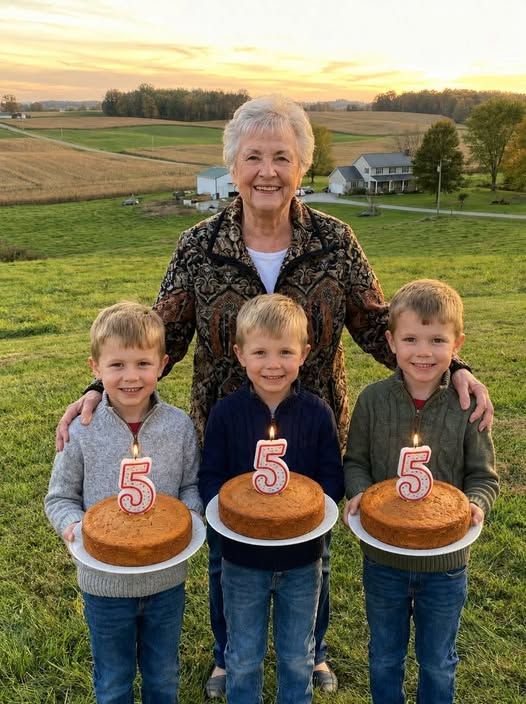
In this photograph, three young boys stand side by side holding round cakes decorated with candles shaped like the number five. An older woman stands behind them, smiling as she wraps her arms around the children. Green fields stretch into the distance, while the warm evening sky adds a peaceful glow to the scene.
The picture captures a familiar but meaningful part of family life: celebrating childhood and making time for the people who matter. Although the photograph does not tell us the family’s identities or personal story, it offers an opportunity to explore why birthdays, family traditions, and everyday moments can mean so much.
Why Simple Birthday Celebrations Can Feel So Special
Birthdays mark another year of growth. For young children, they can also be an exciting opportunity to enjoy cake, receive attention from loved ones, play games, and feel included in a special occasion.
Adults sometimes focus on making celebrations impressive. They may spend time choosing decorations, organizing activities, or planning elaborate surprises. Yet the heart of a memorable birthday is often much simpler: making a child feel loved, appreciated, and included.
A homemade cake, a favorite song, a family photograph, or a few kind words can help turn an ordinary day into a meaningful occasion.
There is no single formula for a perfect birthday. Some families enjoy large gatherings, while others prefer a quiet celebration at home or outdoors. What matters most is choosing an experience that suits the child and gives family members an opportunity to spend time together.
The Meaning Behind a Fifth Birthday
The number five on each cake makes the photograph especially fitting for an article about early childhood. Around this age, many children are becoming more independent, developing new communication skills, and discovering more about the world around them.
According to the U.S. Centers for Disease Control and Prevention (CDC), many children can tell a simple story, take turns during games, name some numbers, and engage in activities that require attention by age five. These are developmental milestones, not requirements that every child will reach at exactly the same time.
Families can support this stage of growth through everyday activities such as reading together, playing games, encouraging creative activities, and talking with children about what interests them.
A birthday can provide a natural opportunity to celebrate these changes without turning the occasion into a competition. Children develop at different rates, and each child’s progress deserves encouragement rather than comparison.
Parents and caregivers can find additional guidance in the CDC’s developmental milestones for five-year-olds.
Why Time Together Matters More Than Expensive Gifts
Children may enjoy toys, presents, and colorful decorations, but meaningful family experiences do not have to come with a high price tag.
Reading a favorite story, taking a walk, baking together, playing outside, or sitting down for a family meal can create opportunities for connection. These activities also allow adults to listen to children, answer their questions, and share in their excitement.
The American Academy of Pediatrics explains that regular family rituals and activities can help strengthen family bonds. Traditions do not need to be complicated to become an important part of family life.
For example, a family might sing the same birthday song every year, take a photograph in a favorite place, let the birthday child choose a meal, or invite relatives to share a favorite memory.
Over time, these repeated activities can become familiar markers of family identity. Children learn what to expect, look forward to shared experiences, and have opportunities to participate in traditions as they grow.
Learn more in the American Academy of Pediatrics’ article, Your Family Rituals.
The Special Role of Caring Adults in Childhood
The older woman standing behind the boys is one of the most noticeable features of the photograph. Her relationship to the children is not established by the image, but her presence illustrates a familiar scene: an adult sharing a joyful occasion with young children.
Parents, grandparents, relatives, teachers, and other caring adults can all play meaningful roles in a child’s life. What matters is the quality of their interactions and the support they provide.
The Harvard University Center on the Developing Child describes responsive interactions between children and caring adults as “serve and return.” A child might ask a question, point at something interesting, or express an emotion, and an attentive adult responds. These back-and-forth exchanges help support early language, social skills, and healthy development.
Such connections do not require special occasions. They can happen while preparing dinner, walking outdoors, looking at a picture book, or talking about something that happened during the day.
A birthday photograph may capture only a few seconds, but the relationships represented by shared experiences can develop through countless small interactions over time.
Read more about this research in Harvard’s Serve and Return resource.
How to Make Childhood Birthdays More Meaningful
Families looking for simple ways to make birthdays memorable can start with a few thoughtful ideas.
1. Let the child help make decisions
Ask the child to choose a favorite cake flavor, song, game, or activity. Giving children age-appropriate choices helps them participate in the celebration and feel that their preferences matter.
2. Create a simple family tradition
A birthday tradition could be as easy as taking a photograph in the same spot each year, sharing a favorite meal, or writing a short note about something the child learned or enjoyed during the past year.
3. Make room for play
Young children often enjoy movement, imagination, and hands-on activities. Outdoor games, drawing, building blocks, music, or a treasure hunt can add excitement without requiring a large budget.
4. Capture the moment naturally
Photographs can help families revisit meaningful occasions. Take a few posed pictures, but also allow time for natural smiles, conversations, and play.
If sharing photographs online, consider the children’s privacy and the family’s preferences before posting identifiable images publicly.
5. Focus on inclusion rather than perfection
Not every celebration will go according to plan. A cake might look uneven, the weather might change, or children might become distracted. These things do not have to spoil the day.
A relaxed atmosphere, kind words, and time together can matter more than perfectly coordinated decorations.
Why Family Photographs Become More Meaningful Over Time
A photograph freezes a small piece of life that would otherwise pass in an instant. Years later, family members may look back at an image and remember a favorite place, a familiar face, a child’s changing smile, or the way a celebration was arranged.
The photograph may also prompt conversations. Children can ask who was present, what they enjoyed, or how family celebrations have changed over the years.
However, a photograph cannot tell an entire story on its own. It does not reveal everything that happened before or after the camera clicked, and viewers should avoid assuming relationships or personal circumstances from appearances alone.
One useful habit is to add a short caption when saving family pictures. Recording the date, location, occasion, and a few verified details can help preserve context for the future.
Families can also create a simple digital album or printed scrapbook. These collections do not need to be elaborate. Even a handful of photographs each year can document changes, celebrations, and shared experiences.
Frequently Asked Questions
1. What makes a birthday memorable for a young child?
A memorable birthday often includes activities the child enjoys, attention from caring people, opportunities to play, and a sense of being celebrated. Every child is different, so it helps to consider individual interests and needs.
2. Why are family traditions important?
Regular family rituals can create shared experiences, provide a sense of continuity, and offer opportunities for connection. Simple traditions, such as birthday songs or annual photographs, can be meaningful without being expensive.
3. What are some affordable birthday ideas for five-year-olds?
Families can organize a backyard picnic, a craft activity, a storytime celebration, an outdoor treasure hunt, or a homemade cake decorating session. Choosing activities suited to the child’s interests can make a modest celebration feel special.
4. How can families preserve childhood memories?
Take photographs, write down important details, create a scrapbook, save birthday cards, or record a short note about the child’s favorite activities that year. Store digital files securely and make backups when possible.
5. What should parents remember about child development at age five?
Children develop at different rates. The CDC provides milestone guidance for common skills in communication, movement, learning, and social interaction. Parents who have concerns about a child’s development should discuss them with a healthcare professional.
Conclusion: The Beauty of Ordinary Family Moments
Three cakes and three candles shaped like the number five make this photograph memorable, but its broader message is about the value of celebrating life’s small milestones.
Childhood moves through many stages, and family photographs offer a way to revisit some of them. Birthday traditions, shared activities, and attentive relationships can give children opportunities to feel included, supported, and appreciated.
No family needs an elaborate party to create a meaningful celebration. A thoughtful activity, a homemade treat, an encouraging conversation, or a few minutes spent together can be enough to make a day feel special.
Ultimately, the most valuable part of a birthday may not be the cake or the decorations. It may be the opportunity to pause, celebrate a child’s growth, and enjoy the company of people who care.
Because the moments that seem ordinary today can become treasured memories tomorrow.