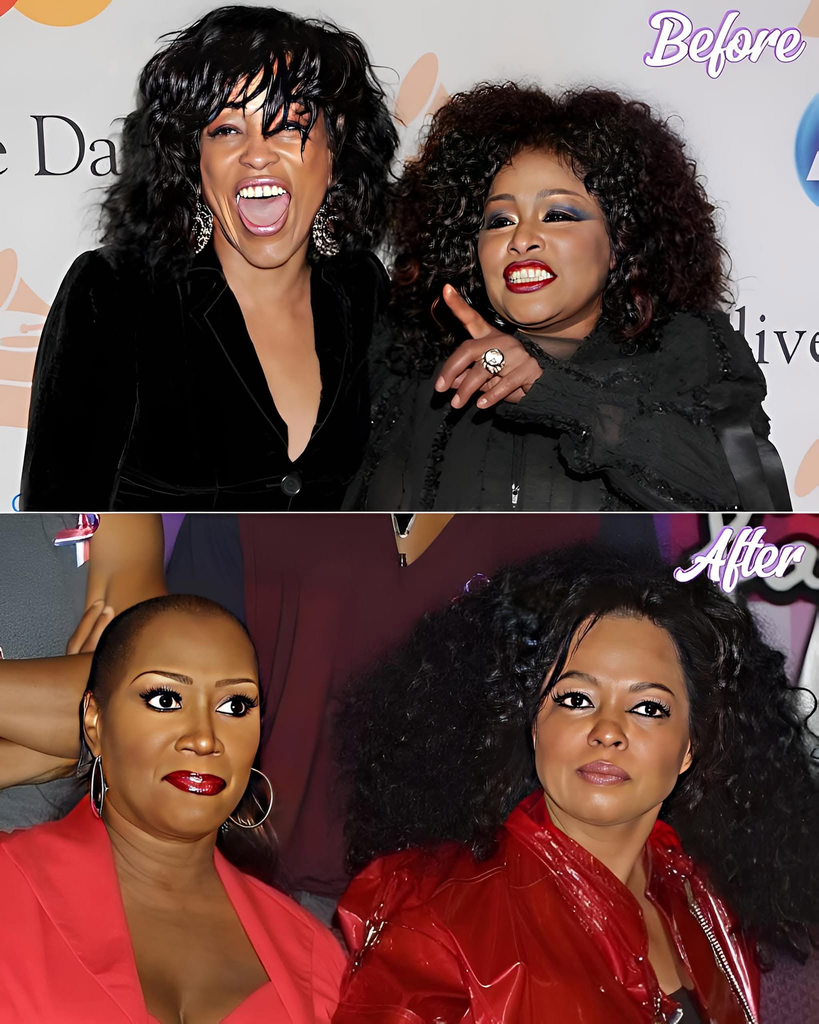
A side-by-side photograph can make two appearances look worlds apart. In this image, two women appear in contrasting fashion settings: the upper photograph features black outfits, voluminous curls, statement earrings, and expressive smiles, while the lower photograph features striking red clothing, different hairstyles, and a more composed presentation.
The contrast immediately catches the eye. But what actually makes these looks feel so different? The answer involves more than clothing alone. Hairstyles, makeup, lighting, facial expressions, accessories, and camera angles all influence how an image is perceived.
Although the collage is labeled “Before” and “After,” it does not establish when the photographs were taken, who the women are, or whether the images document a real transformation. What it does offer is an opportunity to explore the visual details that make fashion comparisons so interesting.
The First Look: Bold Black Fashion and Dramatic Details
The upper image presents a coordinated, dark fashion palette. Both women wear black outfits, while their voluminous hairstyles frame their faces and create a strong visual presence.
The woman on the left wears a fitted black jacket with a deep neckline and statement earrings. Her wide smile and expressive pose contribute to an energetic, celebratory mood.
The woman on the right wears a black outfit with textured details and prominent sleeves. Her curly hairstyle adds volume, while her bright lipstick and jewelry provide contrast against the darker clothing.
Black is a popular choice for formal events because it can create a clean, sophisticated silhouette. It also provides a useful background for accessories, shiny fabrics, and detailed hairstyles.
In this photograph, the dark clothing brings attention to the women’s faces, expressions, and hair. The result feels dramatic without relying on bright clothing colors.
The Second Look: Red Clothing and a Different Mood
The lower image uses red as its dominant fashion color. One woman wears a bright red blazer with large hoop earrings and sleek, pulled-back hair. The other wears a glossy red jacket, paired with voluminous dark curls.
Red naturally draws attention because it contrasts strongly with darker backgrounds and creates a clear focal point within a photograph.
The two outfits also demonstrate how the same color can communicate different styles. A structured red blazer can appear polished and formal, while a glossy jacket can introduce a bolder, more theatrical quality.
The hairstyles add another layer of contrast. A pulled-back style emphasizes the outline of the face and creates a streamlined appearance. Full, textured curls create more volume and a softer frame around the face.
Neither approach is inherently better. Each produces a different visual effect, and personal preference plays an important role in deciding which look works best.
How Hairstyles Influence an Overall Appearance
Hair is one of the most noticeable elements in a portrait. Its length, volume, texture, and position can change the balance of an entire look.
Voluminous curls can make a hairstyle feel expressive and dramatic. Sleeker styles can give an outfit a more structured, understated finish. Layers around the face can also change how the eyes, cheekbones, and jawline appear in a photograph.
Accessories matter, too. Earrings become more visible when hair is pulled back, while large curls can partly conceal jewelry and create a different balance between the face and the outfit.
The comparison in this image illustrates how hairstyle choices contribute to the overall impression of an appearance. However, a different hairstyle alone does not prove that someone has undergone a permanent physical change.
The Role of Makeup in Before-and-After Photos
Makeup can significantly influence the visual character of a portrait. Lip color, eyeliner, eyeshadow, foundation, and highlighting techniques all affect how facial features appear under different lighting conditions.
In the upper photograph, the women wear noticeable eye makeup and bold lip colors. In the lower photograph, the makeup also emphasizes the eyes and lips, but the overall effect differs because of the outfits, backgrounds, and presentation.
Red lipstick, for example, can become a focal point when paired with dark clothing. Eye makeup can create definition, while foundation and finishing products can influence how skin reflects light.
Flash photography introduces another variable. Depending on its direction and intensity, flash can create highlights, deepen shadows, and make certain makeup products appear more reflective.
This is why photographs taken under different conditions should not automatically be treated as direct evidence of changes in someone’s appearance.
Why Lighting and Camera Angles Matter
A photograph is not simply a record of how someone looks in person. It is also the result of a particular camera position, lighting arrangement, exposure, and image-processing method.
Light coming from the front can reduce visible shadows, while side lighting can emphasize texture and facial contours. A slightly different camera angle can change the apparent proportions of a face or the shape of an outfit.
The backgrounds in this collage are also different. The upper image has a light event backdrop, whereas the lower image has a darker setting. This difference changes how the clothing and skin tones contrast with their surroundings.
The American Society of Plastic Surgeons recommends comparing before-and-after photographs with attention to lighting, camera distance, head position, expression, makeup, hairstyle, and image scale. These factors are useful considerations whenever images are presented as evidence of a transformation.
Read its guidance here: Can You Trust That Transformation?.
How to Evaluate a Before-and-After Comparison
Before accepting a dramatic comparison at face value, consider a few practical questions.
Are the photographs authentic? Look for original sources, publication dates, and reliable captions. A label added to a collage does not independently verify the images.
Were the photographs taken under similar conditions? Differences in lighting, camera angles, backgrounds, and facial expressions can make two appearances seem less alike.
Is there enough context? A genuine transformation claim should explain what changed, when the images were taken, and what evidence supports the explanation.
Could editing be involved? Cropping, filters, retouching, and other digital alterations may change the appearance of an image. Without the original files, it is not always possible to establish whether editing occurred.
These questions are especially important when photographs are shared widely on social media, where images can circulate without their original context.
Why Fashion Comparisons Attract Attention
Before-and-after images are easy to understand at a glance. They invite viewers to compare colors, hairstyles, clothing, and expressions without needing a long explanation.
They also encourage personal opinions. Some people prefer the elegance of black outfits, while others are drawn to the energy of red. Some favor voluminous curls, while others prefer sleek hairstyles.
There is no universal answer to which look is best. Fashion is subjective, and the most successful style often depends on the occasion, the person’s comfort, and the image they want to present.
At the same time, it is worth remembering that polished photographs are selected moments rather than complete representations of a person’s life or appearance.
Frequently Asked Questions
1. What is the main difference between the two photographs?
The upper image features black outfits, voluminous hairstyles, and statement accessories. The lower image emphasizes red clothing, different hairstyles, and a contrasting background.
2. Can makeup change how someone looks in a photograph?
Yes. Lip color, eye makeup, foundation, and highlighting can influence contrast, definition, and the way light reflects from the face.
3. Does a before-and-after image prove a physical transformation?
No. The comparison alone cannot establish what changed or why. Reliable dates, original photographs, and additional context are needed to support such a conclusion.
4. Why can the same outfit or person look different in photographs?
Lighting, camera distance, angles, facial expressions, image processing, and the surrounding colors can all influence how an image appears.
5. How can readers check whether a transformation photo is reliable?
Look for the original source, matching photographic conditions, credible captions, consistent dates, and independent evidence supporting any specific claim.
Conclusion
The contrast between these black and red fashion looks shows how much visual presentation can influence the impression created by a photograph. Hairstyles frame the face, makeup adds definition, clothing establishes a color palette, and lighting determines how the details appear.
The most useful lesson is not that one appearance is better than another. It is that photographs should be viewed with an understanding of the choices behind them.
Without verified identities and dates, this particular collage cannot establish a genuine personal transformation. Nevertheless, it offers an engaging example of how fashion, beauty, and photography work together to create different visual moods—and why a closer look often reveals more than the first impression.