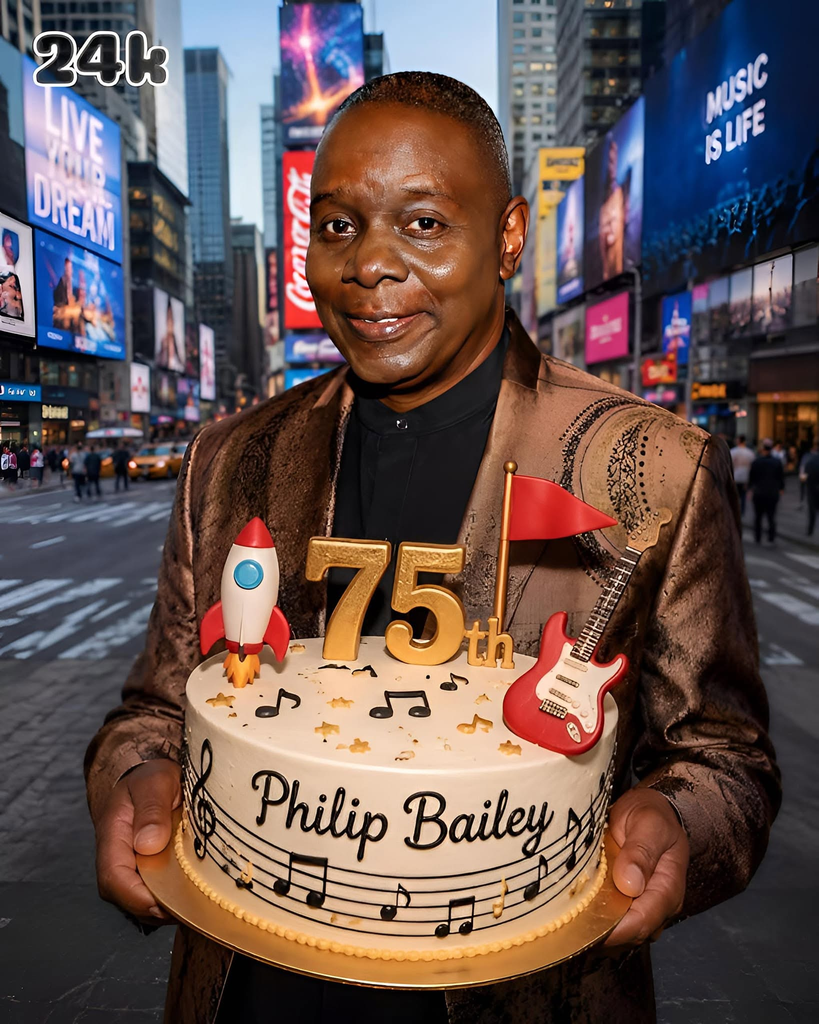
Philip Bailey has spent decades helping create the kind of music that brings people together. Best known as one of the lead singers of Earth, Wind & Fire, the American singer has earned a lasting place in music history through his distinctive falsetto, remarkable vocal range, and contributions to some of the most recognizable songs in R&B, funk, soul, and pop.
Born on May 8, 1951, Bailey turned 75 in 2026. His birthday offers an opportunity to look back at the career of a musician whose talents have extended far beyond one band or musical genre.
From his early beginnings in Denver, Colorado, to international success with Earth, Wind & Fire and his achievements as a solo artist, Bailey’s story is one of musical versatility, dedication, and lasting influence.
Growing Up With a Love of Music
Philip Bailey was born in Denver, Colorado, where his interest in music developed early in life. According to his official biography, he grew up listening to a variety of styles, including jazz, folk, country, and popular music.
He was particularly influenced by jazz musicians such as Miles Davis and John Coltrane, whose work helped shape his appreciation for musical expression.
Bailey’s early musical experiences laid the groundwork for a career that would eventually cross several genres. Rather than limiting himself to a single style, he developed a voice capable of adapting to different musical settings.
That versatility would become one of his greatest strengths.
Joining Earth, Wind & Fire
Bailey’s career took a major turn when he joined Earth, Wind & Fire in the early 1970s.
Founded by Maurice White, the group developed a distinctive sound that blended R&B, funk, soul, jazz, pop, rock, and other musical influences. Its ambitious arrangements, energetic performances, and uplifting songs helped it stand apart from many other bands of the era.
Bailey became an important part of the group’s vocal identity, sharing lead-singing responsibilities with White.
His high-register voice provided a striking contrast to the band’s deeper vocal textures. That contrast helped give Earth, Wind & Fire’s music its recognizable character.
The Colorado Music Hall of Fame highlights Bailey’s four-octave vocal range and his contributions to songs including “Reasons,” “Fantasy,” “September,” “Sing a Song,” and “Shining Star.”
These recordings became enduring parts of the band’s catalog, reaching listeners across generations.
The Voice Behind Some of the Band’s Best-Known Songs
One of Bailey’s defining musical qualities is his falsetto, a singing technique that allows a vocalist to produce notes above their usual vocal register.
His expressive high notes helped create some of Earth, Wind & Fire’s most memorable musical moments.
The song “Reasons,” for example, showcases a more intimate and emotionally expressive side of the band’s sound. Other recordings demonstrate Bailey’s ability to move comfortably between energetic funk arrangements, polished pop production, and soulful melodies.
His contributions were not simply about hitting high notes. He brought phrasing, emotion, and musical sensitivity to performances that demanded both technical control and expressive depth.
Earth, Wind & Fire’s appeal also depended on the collective talent of its musicians, singers, arrangers, and producers. Bailey’s voice was a crucial part of that larger creative partnership.
The band’s success helped introduce its distinctive blend of musical traditions to audiences around the world.
A Successful Career Beyond the Band
Although Bailey is closely associated with Earth, Wind & Fire, his career has never been limited to the group.
He began releasing solo music in the early 1980s, exploring styles that included R&B, pop, jazz, and gospel.
One of the most significant milestones came with his 1984 album Chinese Wall, produced by Phil Collins.
The album featured “Easy Lover,” a collaboration between Bailey and Collins that became an international hit. The song’s energetic arrangement, memorable vocal interplay, and polished production introduced Bailey’s talents to an even broader audience.
It also demonstrated that he could succeed in a musical setting different from the sound that had made him famous.
Bailey continued exploring other genres throughout his solo career. His gospel recordings reflected his spiritual interests, while later projects allowed him to pursue jazz and additional musical collaborations.
His album Triumph, released in 1986, earned a Grammy Award in the gospel category, adding another important achievement to his career.
These projects reveal an artist who remained interested in learning, experimenting, and expanding his musical horizons.
Awards and Recognition
Bailey’s career has brought significant recognition both as a member of Earth, Wind & Fire and as an individual artist.
Earth, Wind & Fire was inducted into the Rock & Roll Hall of Fame in 2000. The group also received numerous other honors during its career, reflecting its influence on popular music.
The Colorado Music Hall of Fame inducted Earth, Wind & Fire members Philip Bailey, Larry Dunn, and Andrew Woolfolk in 2017.
Bailey has also received recognition for his individual musical achievements, including the Grammy Award associated with his gospel album Triumph.
These honors reflect different dimensions of his work: his contributions to one of America’s most influential musical groups, his success as a solo performer, and his ability to move across musical traditions.
Awards tell only part of the story, however. The continued popularity of the band’s recordings and Bailey’s solo work demonstrates how deeply his music has connected with listeners.
Why Earth, Wind & Fire’s Music Still Matters
Earth, Wind & Fire’s music continues to reach new audiences because its appeal extends beyond a particular decade or musical trend.
Songs such as “September,” “Shining Star,” and “Let’s Groove” combine memorable melodies, energetic rhythms, rich arrangements, and performances that invite listeners to participate.
The group’s music has remained present in concerts, celebrations, radio playlists, films, and other popular-culture settings.
Bailey’s voice is an essential element of that musical identity. His ability to combine technical precision with emotion helps give the band’s recordings their distinctive character.
The music also demonstrates the value of collaboration. Earth, Wind & Fire brought together musicians with different strengths and influences, creating a sound that was more expansive than any single genre.
For longtime fans, the songs can evoke personal memories and important moments. For younger listeners, they offer an introduction to an influential period in American popular music.
That continuing connection is one reason Bailey’s work remains worth celebrating.
Philip Bailey at 75: A Career Still Worth Celebrating
Turning 75 is a meaningful milestone, particularly for an artist whose career has spanned multiple musical eras.
Bailey’s journey demonstrates how a distinctive talent can evolve over time without losing its essential identity. He became famous through Earth, Wind & Fire, but he also built a solo career that allowed him to explore different sounds and creative possibilities.
His achievements reflect decades of musicianship, collaboration, and continued curiosity about music.
A birthday-themed image featuring Bailey and a cake marked with the number 75 provides a fitting visual starting point for remembering that journey. However, the image itself does not establish where or how any actual birthday celebration took place.
What can be celebrated with confidence is Bailey’s documented musical legacy: the songs he helped bring to life, the genres he explored, and the listeners who continue to enjoy his work.
At 75, Philip Bailey remains an important figure in the history of American R&B and popular music.
His career is a reminder that a truly distinctive voice can leave an impression that lasts long after the original recordings are released.
Frequently Asked Questions
1. How old is Philip Bailey in 2026?
Philip Bailey turned 75 on May 8, 2026. He was born in Denver, Colorado, on May 8, 1951.
2. What is Philip Bailey best known for?
He is best known as a lead singer of Earth, Wind & Fire, the influential band associated with songs such as “September,” “Reasons,” and “Shining Star.”
3. What is Philip Bailey’s vocal style?
Bailey is renowned for his distinctive falsetto and wide vocal range. His high-register singing became an important part of Earth, Wind & Fire’s sound.
4. Did Philip Bailey have a successful solo career?
Yes. His solo work spans R&B, pop, gospel, and jazz. His 1984 album Chinese Wall featured “Easy Lover,” his successful collaboration with Phil Collins.
5. Is Philip Bailey still associated with Earth, Wind & Fire?
Earth, Wind & Fire’s official members page lists Bailey as a current member, alongside other musicians in the group’s lineup.
Conclusion
Philip Bailey’s 75th birthday year is an opportunity to celebrate more than an age milestone. It is a chance to recognize a musician whose voice helped define Earth, Wind & Fire and whose solo work demonstrated remarkable versatility.
From soulful ballads to energetic funk classics and gospel recordings, Bailey has built a career that crosses musical boundaries while retaining a distinctive personal style.
His story is ultimately about the enduring power of music: how a voice, a song, or a memorable performance can connect people across generations.
For fans who have followed his career for decades and those discovering his work today, Philip Bailey’s musical legacy remains a reason to celebrate.