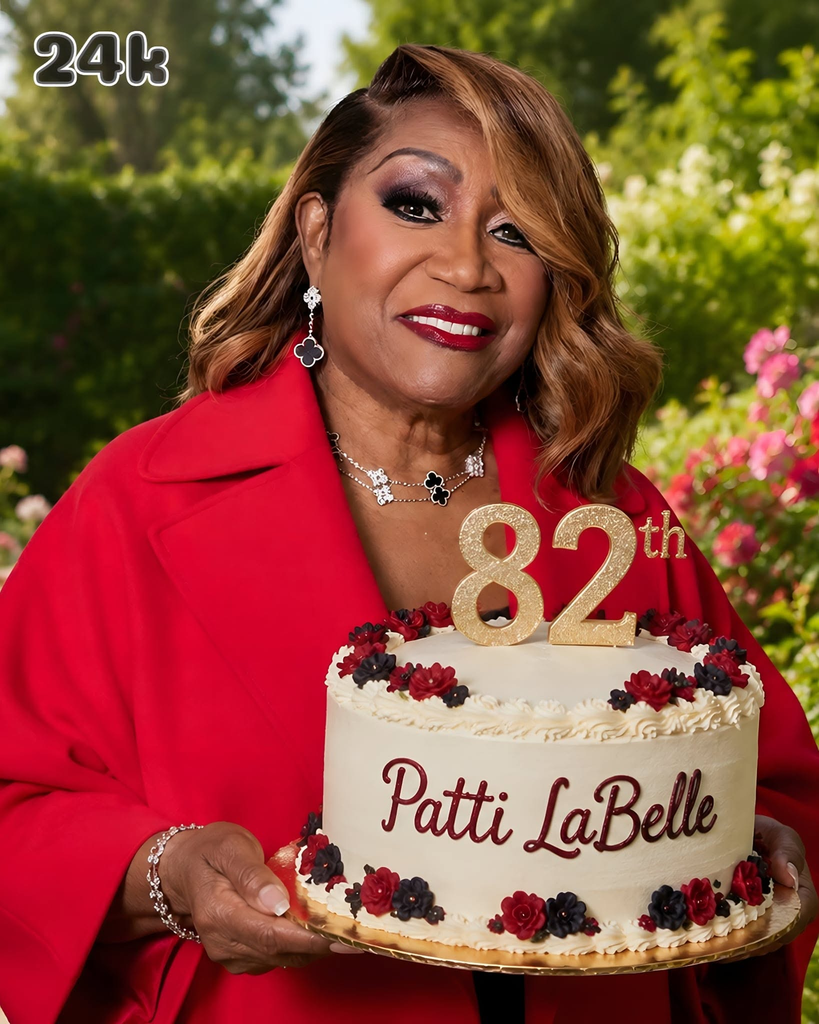
Few voices have made as lasting an impression on soul and R&B music as Patti LaBelle’s. Known for her powerful vocals, emotional performances, and unmistakable stage presence, she has built a career that spans decades. From her early days singing with a vocal group to becoming an acclaimed solo artist, LaBelle has continued to connect with audiences through music that celebrates love, heartbreak, hope, and resilience.
A birthday-themed image featuring a cake marked with her name offers an opportunity to revisit the singer’s remarkable journey. While the photograph itself does not verify a particular celebration, LaBelle’s documented musical achievements provide plenty of reasons to recognize her influence.
Who Is Patti LaBelle?
Patti LaBelle, born Patricia Louise Holte on May 24, 1944, in Philadelphia, Pennsylvania, is an American singer and entertainer widely associated with soul, R&B, gospel, and pop music.
She became known for her remarkable vocal range, expressive delivery, and ability to bring emotion to a performance. Her career has included group success, solo recordings, live concerts, and appearances in other areas of entertainment.
Often celebrated for the strength and versatility of her voice, LaBelle has earned a devoted audience across generations. Her musical journey also reflects the evolution of American popular music, from the vocal-group era of the early 1960s to the broader R&B landscape of later decades.
From Philadelphia Beginnings to Musical Stardom
LaBelle’s musical story began in Philadelphia, a city with a rich tradition of gospel, soul, and rhythm and blues. As a young singer, she developed her talents in a musical environment where vocal harmony and expressive performance played important roles.
In the early 1960s, she became the lead singer of a group originally known as the Blue Belles. The group later became known as Patti LaBelle and the Bluebelles.
Working as part of a vocal group helped LaBelle develop the stage skills and musical confidence that would become important throughout her career. The group performed together, recorded music, and built an audience during a period when vocal harmony groups were an important part of American popular music.
This early experience gave her a foundation for the next major chapter of her career.
The Labelle Era and the Success of “Lady Marmalade”
During the 1970s, the group evolved into Labelle, a trio featuring Patti LaBelle, Nona Hendryx, and Sarah Dash.
The new direction brought a more adventurous sound and a distinctive visual identity. Labelle blended elements of soul, funk, rock, and other musical styles, creating performances that stood apart from many contemporary vocal groups.
The trio’s best-known song, “Lady Marmalade,” became a defining moment in its history. Released in 1974, the recording achieved major commercial success in the United States in 1975.
Its memorable refrain and energetic arrangement helped make it a lasting part of popular music history.
The success of “Lady Marmalade” introduced Labelle to a wider audience and demonstrated the group’s ability to combine powerful vocals with an innovative musical approach.
Although the group eventually went in different directions, this period remained an important chapter in LaBelle’s development as a performer.
Building a Successful Solo Career
After her years with Labelle, Patti LaBelle continued her journey as a solo artist.
Establishing a successful solo career required her to develop her own musical identity beyond the group that had first brought her widespread recognition. She embraced a range of styles, including traditional soul, contemporary R&B, gospel influences, and pop-oriented sounds.
One of the best-known songs associated with her solo career is “New Attitude,” which became especially recognizable during the 1980s. Its energetic sound and confident message helped introduce her to audiences who may not have followed her earlier work.
Another signature recording, “If Only You Knew,” showcased a more tender side of her vocal style. The song demonstrated her ability to communicate vulnerability and emotional depth without sacrificing vocal power.
LaBelle’s solo catalog also includes “On My Own,” her 1986 duet with Michael McDonald. The recording became a major hit and introduced her voice to another broad audience.
These songs illustrate the range that has helped sustain interest in her music across different eras.
Awards and Recognition
Patti LaBelle’s career has earned significant recognition within the music industry.
In 1992, she won a Grammy Award for Best Female R&B Vocal Performance for her album Burnin’. The award marked an important milestone in a career that had already included decades of recording and live performance.
Her influence, however, extends beyond individual awards. Her recordings have become part of the broader history of soul and R&B, while her live performances have helped establish her reputation as a commanding vocalist.
LaBelle has also received recognition for her contributions to entertainment and popular culture. Her career demonstrates how an artist can continue to evolve while maintaining a recognizable musical identity.
Awards offer one measure of success, but the continued interest in her performances and recordings provides another indication of her enduring appeal.
What Makes Patti LaBelle’s Voice So Memorable?
One reason LaBelle remains distinctive is her approach to vocal performance.
She is known for combining strong high notes with expressive phrasing, dynamic changes, and an ability to build emotional intensity throughout a song.
Rather than relying on vocal power alone, she often uses timing, tone, and changes in delivery to communicate a song’s meaning. These qualities are particularly effective in soul and gospel-influenced music, where emotional expression is central to the performance.
Her stage presence is another important part of her reputation. LaBelle’s performances often emphasize the connection between singer, song, and audience.
For listeners, this combination can make a familiar recording feel personal and immediate, even when the song has been heard many times before.
Patti LaBelle’s Influence on Music and Popular Culture
LaBelle’s career has unfolded across several generations of artists and listeners.
Her work with Labelle demonstrated how a vocal group could experiment with sound, fashion, and presentation. Her solo recordings subsequently showed that she could adapt to changing musical trends while retaining the qualities that made her recognizable.
Her songs continue to appear in discussions of classic R&B, soul music, and memorable performances from the 1970s and 1980s.
Younger listeners may encounter her music through playlists, family listening traditions, television appearances, or the continued popularity of classic songs. Longtime fans, meanwhile, may associate her recordings with particular periods of their lives.
This ability to reach different generations is an important part of a lasting musical legacy.
Frequently Asked Questions
1. How old is Patti LaBelle in 2026?
Patti LaBelle was born on May 24, 1944. She turns 82 in 2026.
2. What is Patti LaBelle’s most famous song?
“Lady Marmalade,” recorded with Labelle, is among her most widely recognized songs. Her solo hits include “New Attitude,” “If Only You Knew,” and “On My Own,” her duet with Michael McDonald.
3. Was Patti LaBelle originally part of a group?
Yes. She first gained recognition as the lead singer of the Blue Belles, later known as Patti LaBelle and the Bluebelles. The group eventually became Labelle.
4. Has Patti LaBelle won a Grammy Award?
Yes. She won the Grammy Award for Best Female R&B Vocal Performance in 1992 for Burnin’.
5. Why is Patti LaBelle important to soul music?
Her powerful vocals, expressive performances, successful recordings, and ability to adapt across musical eras have helped establish her as an influential figure in soul and R&B.
Conclusion: A Musical Legacy Worth Celebrating
Patti LaBelle’s story is about more than a collection of hit songs. It is a journey from the vocal-group tradition of Philadelphia to the success of Labelle and a celebrated solo career.
Her performances have brought together vocal strength, emotional expression, and a distinctive stage presence. Songs such as “Lady Marmalade,” “New Attitude,” and “If Only You Knew” continue to represent different chapters of that journey.
A birthday tribute can serve as a reminder to revisit the music and the experiences behind an artist’s long career. In LaBelle’s case, her lasting contribution to soul and R&B offers a meaningful reason to celebrate her place in music history.
Whether someone discovered her recordings decades ago or is hearing them for the first time, Patti LaBelle’s music provides an opportunity to explore a remarkable chapter in American popular music.